Mariah Carey's onstage diva moment 0

xoiper | 1:29 PM |

Four songs into Mariah Carey's Sunday night set at the Formula 1 Singtel Singapore Grand Prix, the singer had a wardrobe malfunction.

Nothing went wrong with her outfit, though -- it was Mariah's dancing that went wrong: She slipped in her high heels while striding across the stage and clapping along to her 1992 hit "Make It Happen." A nearby backup dancer quickly rushed to her aid and a smiling Carey made a very quick recovery, telling the crowd, "I did that on purpose."

Her next order of business was to remove the offending footwear. "Someone come out here and take these shoes off," Carey said into her microphone, adding, "Obviously I'm supposed to be barefoot."

When an assistant arrived with a bottle of water, Mariah pointed to her feet and gesticulated repeatedly until her message was clear.

"We love her. She is a darling dear," Carey said of the woman, identifiable as her stylist, Blair. Three dancers helped Carey balance -- and she kept on singing -- while an additional assistant ran out from backstage to help her out of her heels.

Carey is known for beckoning her crew onstage during shows for wardrobe and microphone adjustments. On New Year's Eve in New York last year, she announced, "I need some lipstick real quick and my hair fluffed," and also called in personal assistants to affix her microphone pack and hand her a glass of champagne. "They say I'm a diva so, might as well act like one," she told the crowd at Madison Square Garden.

The singer's predilection for high heels has tripped her up before. She nearly fell down while walking out onstage for a November 2009 appearance on "The Jay Leno Show."

[Rewind: Onstage tumble lands Pink in hospital]

After her show in Singapore last night, Carey rushed out a tweet so fans would know all was well and her good humor was intact. "TY SO much to my fans in Singapore!!!" she tweeted. "Yeah, several hectic moments, (lol!)but I tried to swirl them into festive!.Love+ God Bless."

Fans were extra curious about the fall because of ongoing rumors that Carey is pregnant. Mariah has refused to issue a statement confirming or denying she will be having her first child with husband Nick Cannon. In her only official comment on the matter, Carey said in a statement last month: "I appreciate everyone's well wishes, but I am very superstitious." Referring to her longtime publicist, Carey added: "When the time is right, everyone will know -- even Cindi Berger."

[Photos: Old school images of Mariah]

Carey's second Christmas album, "Merry Christmas II You," is due November 2. The disc features four new original songs, including first single "Oh Santa," along with production by Jermaine Dupri and Randy Jackson.

Turning back the clock for better health 0

xoiper | 6:39 AM |

http://howt00.blogspot.com/

The plaid couch and orange shag carpet in your grandmother's 70s living room may seem outdated and old-timey to you. Her time capsule, however, might not just be keeping her young, it could be keeping her alive.

In an experiment documented by the BBC, researchers found that pretending you are living in your youth may actually impact how young you feel and act. The BBC invited six aging British celebrities to live in a country house for a week. From the clothes they wore to TV shows they watched, the participants, aged 76 to 88, were submerged in a time when they were in their heyday. Their bedrooms were even replicas of the ones they slept in during that decade.

The three actors, one athlete, and two journalists—all retired— volunteered to take care of themselves in the house and engage in assigned tasks, like carrying their bags up a flight of stairs. A team with surveillance cameras quietly observed them through it all.

Fending for themselves, the BBC notes, was a big challenge for the six, but also encouraged pushing past age-related limitations. They watched one participant who normally relied on two canes or a wheelchair to get around, triumphantly take nearly 150 steps using only one cane.

Although the BBC admits the participants' progress was not uniform, the changes in confidence, independence, and physical ability are notable. After just one week of living like it was the 70s, testing revealed almost all of them had improved memory, stamina, eyesight, and mood.

These results are fascinating, but not out of the blue. The BBC experiment was inspired by 1979 research conducted by Harvard professor Ellen Langer, who took a group of men back to the year 1959 in her own legendary "counterclockwise study."

"It's too easy to have everybody take care of us. But you can be helped to death," Langer noted.

In fact, the BBC points to a study that shows when nursing home residents were given some small responsibility and choice in how they spent their time, only 18 months later they were more active, alert, happy and "far more likely to be alive."

However, you might not have to go back twenty (or more) years to regain the confidence and mobility you had as a younger person. But, according to Langer's research, you may have to go against the grain if you want to be an elderly person who continues to act, feel, and live young.

And, experts say, you have to get started right away. Developing good brain habits now, reports Dr. Cynthia R. Greene, author of Total Memory Workout: 8 Easy Steps to Maximum Memory Fitness, will improve your current daily intellectual performance as well as reduce the risk for dementia in years to come.

Before you dig out your polyester culottes from decades past, try the following—experts believe they can help us all hold on to the best parts of our youth as the years go by.


1. Break out the community college catalog or sign up for sign language class. Remember when people wrote in your high school yearbook, "Don't ever change"? Forget that. Although it was once believed that our brains were hardwired for specific tasks, new information shows that our brains are dynamic and even rejuvenating. This means a stroke victim may be able to transfer skills from a damaged region of the brain to one that is more viable, says Dr. Terry Grossman, author of Transcend: Nine Steps to Living Well Forever. It also means that acquiring new skills as we age will help keep us youthful.

"Utilizing previously unused areas of the brain as one ages can help slow down, stop, and reverse some signs of brain aging," Dr. Grossman says.

How can you jump on that tomorrow? Dr. Grossman says learning a new language, taking music lessons to play a new instrument, sitting in on an adult education class in a subject you've always been curious about, or traveling to an area you've never explored are all ways to get neurons firing.


2. Work your body.
Data strongly suggests that regular aerobic activity improves human brain power immediately and could protect us from major memory impairment in the long term. Even walking for 45 minutes a few times a week can make a difference.

"Even folks with limited mobility or cognitive impairment should be encouraged to maintain their aerobic wellness as much as possible by participating in activities that are accessible to them [such as "sit and be fit" programs, water aerobics, etc.]," Dr. Greene notes. "A small study a few years ago out of Australia suggested that regular aerobic activity may slow progression of memory impairment in individuals in the early stages of the disease. While that needs to be replicated and seen in larger samples, it was an interesting window into the role exercise may play for brain health across the board."


3. Feed your body, but only until it is 80 percent full.
Whether you want to recapture or hang on to your youthfulness, you're going to have to pay more attention to the food and drink you put into your body.

Longevity expert and author Dan Buettner partnered with National Geographic to study how people in some pockets of the world not only live longer, but live better. He compressed their lessons into nine tenets, and it's not a shocker that one of them is to eat wisely.

"Instead of groping from fad diet to fad diets, use strategies for eating 20 percent less at meals. Avoid meat and processed food," Buettner says. More obviously, he adds that it's a good idea to consume more vegetables and, if it works for your
health history and current medical condition, drink red wine in moderation.


4. De-stress, and soon. We hear about releasing stress so often that it can easily feel like one more overwhelming task on the to-do list. But Dr. Grossman says it is a must if you want to live longer and feel good during all of those years.

The stress situation in this country is dangerously excessive and could be causing us to age more quickly, he notes.

"It is estimated that with the current economic conditions, stress levels in the United States today are approaching those that existed in the days following 9/11," Dr. Grossman asserts.

To break the cycle of stress, try engaging in a hobby, taking scheduled vacations, or regularly get spa treatments or massages.


5. Keep playing the classic games, just do them faster.
Our intellectual skills change as we age. The great news, Dr. Greene says, is that deductive reasoning and our base of knowledge improve. The challenge, however, is that our attention, processing speed, short-term memory, and cognitive flexibility often slow. Just like our biceps, regularly exercising mental muscles can help us stay healthier over time.

While you can certainly use online games for brain fitness, Dr. Greene also suggests pulling out games that challenge memory, oldies-but-goodies like Boggle, Simon, Bananagrams, or even the word jumble. To glean the greatest benefit, time yourself with the goal of getting faster each time.


6. Be social, but choose your friends wisely. "It has been found," Dr. Grossman reports plainly, "that being socially isolated has health risks on par with those of cigarette smoking."

While the most important thing you can do to keep yourself young during your lifetime is to be social, Dr. Buettner says it is also critical that you spend time with people who have the healthy habits you prioritize or want to emulate.

He calls this choosing "the right tribe" and says centenarians, people who live to at least 100f, show exactly how this works.

"All of the world's longest-lived people were born into -- or consciously chose to associate with -- the right people . If your three best friends are obese, there's a 50 percent better chance that you'll be obese," says Dr. Bruettner. "The reverse is true, too. If you dine with people who eat healthy food, you're more likely to eat healthy food, if the friends you spend most time with play a sport, you're more likely to join them."


He says our trend toward isolation -- 15 years ago, the average American had three good friends, as compared to two today -- is shaving years off of our lives. Finding a community of just a few people who stimulate you intellectually, encourage you to try new things and be physically active, and maybe even play a round or two of Yahtzee! could hit lots of targets as you aim to stay young from year to year.

What do you do if some of those important people, like caretakers or friends or even grown children, in your life won't stop telling you to slow down, reduce your activity, and accept your age? Dr. Grossman responds bluntly, "Wrong advice -- no matter how well-intentioned -- is still wrong. I would ignore it."


7. Take control of your life by taking control of your clutter.
In a thought-provoking New York Times article on the physical, emotional, and cognitive toll possessions can have on older people, Dr. David J. Ekerdt spelled out the myriad approaches we can take to downsize during our later years.

“This isn’t just a move from one residence to another, as it would be earlier in life. This is a step closer to the inevitable world of frail aging, a reminder that time is growing short. People want to hold on to the symbols of their former lives and competence,” Ekerdt told the Times.

Getting rid of a wedding dress or sorting through old photos isn't just a de-cluttering exercise, it is a rite of passage. Sorting through all of that stuff can certainly be as physically and mentally draining as the British celebrity who put down her cane and walked across the room. However, if we take control of the possessions we keep and validate what the stuff we discard meant about who we once were, we will be better prepared to move forward into the next chapter of our lives.

Ekerdt's research acknowledges the stress and pressure of sorting through a lifetime of possessions but also shows that people feel satisfied overall when it is accomplished.

Perhaps we can apply both Ekerdt's study and the BBC experiment as we move through our own homes and years. Whether we opt to stand up out of a wheelchair, donate all those unopened cookbooks, or choose to take up French, making the choice to hold on to the fiery parts of ourselves and release the stereotypes of getting older might justl keep us thriving, no matter how many candles are on our cake.

Student succeeds where DaVinci failed 0

xoiper | 6:35 AM |

http://howt00.blogspot.com/

ornithopter
(Photo via Todd Reichert)

A Canadian university student has done what Leonardo da Vinci had only dreamt of: Piloted a human-powered "wing-flapping" plane! Called an ornithopter, and the inspiration for modern day helicopters, the machine was first sketched by da Vinci way back in 1485 and never actually built.

Todd Reichert, an engineering student at the University of Toronto, made history by sustaining flight in his ornithopter -- named Snowbird -- for 19.3 seconds and covering 475.72 feet. Snowbird is made from carbon fiber, balsa wood, and foam. The 92.59 pound vehicle maintained an average speed of 15.91 miles per hour.


Human-Powered Flight from U of T Engineering on Vimeo.

Todd and his plane made the accomplishment on August 2, 2010, at the Great Lakes Gliding Club in Tottenham, Ontario. The crew kept the achievement quiet for nearly two months to get the data finalized. Todd and some 30 other students had been working on the plane for 4 years.

ornithopter team
(Photo via Todd Reichert)

The team went through 65 practice flights, and sadly, the aircraft will probably never be flown again.


Todd endured a year-long exercise program in which he lost 18 lbs. to prep for the flight. Because the plane has a wingspan of 104 feet -- which is comparable to that of a Boeing 737 -- the pilot had to pedal with his legs all while pulling on the wings to flap at the same time. And he had to do it fast enough to fly!

ornithopter wing
(Photo via Todd Reichert)

"Our original goal was to complete this sort of original aeronautical dream to fly like a bird," said 28-year-old Reichert yesterday. "The idea was to fly under your own power by flapping your wings."

The flight, witnessed by the Federation Aeronautique Internationale, is the first officially confirmed flight in an ornithopter.

"Thousands of people have tried to do this for hundreds of years," said Reichert. "To be honest, I don't think it's really set in yet that I'm the one who has been successful. I was pushing with everything I had. When I finally let go and landed, I was hit with a breadth of excitement. It was pretty wild."

I bet it was, Todd!

Beauty blunders and how to avoid them 0

xoiper | 6:31 AM |

http://howt00.blogspot.com/

If you thought celebrities always looked perfect, well, think again. Even with their expert teams of makeup artists, hairstylists, and ample time and money set aside for personal grooming, everyone experiences a beauty faux pas once in a while. Here are the top blunders we've seen on the red carpet, how to avoid making them yourself, and easy ways to fix them on the fly.

Getty Images

Getty Images


Lindsay Lohan's blotchy fake tan


Though summer is over, many people try to maintain their sunkissed look for a few months. If your self-tanner application is orange-y and uneven, exfoliate with a loofah to remove excess product. Soak in a warm bath and rub a sliced lemon over blotchy skin--the citric acid will loosen the pigment. If you're in a hurry, try using a bronzer or tinted moisturizer to even things out.


Getty Images

Getty Images


Jennifer Lopez's unfortunate beehive


We still love Jenny from the block, but she's made some odd styling choices lately. Like this Marge Simpson-inspired 'do. A smaller chignon would have been a great way to showcase her one-shoulder dress, but this is just too weird. While all press may be good press for J.Lo, you don't want hideous photos to haunt you on Facebook. If you're trying something really out there and experimental, get a second opinion before heading out the door.


Getty Images

Getty Images


Taylor Momsen's raccoon eyes


Heavily lined lids is an edgy look, but this "Gossip Girl" looks like she has two black eyes and there's nothing appealing about that! While the know-it-all teen probably won't listen to our advice, we'd like to advise our readers to keep dark eyeshadow above the eye, and to go for a softer, smokey effect layering in lighter shades as well. But we're not worried about you guys making this mistake at home unless perhaps you're a rebellious teenager.


Getty Images

Getty Images


Nicole Kidman's face powder snafu


Shhh... no one tell Nicole that she has powder all over her face! We're not sure how exactly the actress ended up on the red carpet for her film premiere looking like this, but let it be a lesson to you. Not all makeup looks the same under a camera flash! Many bronzers have intense shimmer, and an eyeshadow that looked pretty inside may transform outdoors, so apply cosmetics in natural light whenever possible. On the fly, be sure to keep a compact mirror in your purse. Sometimes even a top-notch makeup artist can't be trusted!


Getty Images

Getty Images


Courtney Love's smeared lipstick


We know it's her signature, but wouldn't it be awesome if Ms. Love's lipstick was properly applied and in the lines for once? Here's a tip: anytime you're wearing a high-pigment color and looking for longevity be sure to line and fill in your lips with a pencil of the same shade. Then coat with lipstick, and don't forget to blot. If you're already out and your lipstick is giving you trouble, rub it off carefully with a napkin and go over your lips with your trusty gloss. There should be enough pigment left that the look seems deliberate.


Getty Images

Getty Images


Sarah Jessica Parker's bruise


SJP walked the red carpet in a stunning Narciso Rodriguez dress and shoes that would make Dorothy Gale jealous, but we couldn't take our eyes off her massive bruise. If you're going to be photographed, you need to cover up those boo-boos with neutralizing concealer (i.e. use yellow makeup over blue bruises or green-tinted makeup if the blemish is red). Then set the area with powder. For a quick fix: wear opaque tights.


Getty Images

Getty Images


Christina Aguilera's uneven bangs


We can't blame the singer for pouting--someone did a real bang-up job on her bangs. If you're trimming your own bangs at home, cut only a little bit at a time and step back from the mirror to make sure you aren't overdoing it. If the damage has already been done, there are ways to cope till they grow out. You can wear your bangs messy with a bed-head inducing pomade in them to distract from a bad cut, or pin them back or to the side so they blend in with your hair.


Getty Images

Getty Images


Cameron Diaz's shiny face


Dewy skin is cool, but no one should be able to see their reflection in your forehead. Avoid heavy creams on your face, which will trap moisture, and be sure to dust on a light powder before you leave the house. Stash some handy blotting papers in your purse and dab carefully so as not to smear your makeup.

Actor's risky gamble for movie role 0

xoiper | 6:27 AM |

http://howt00.blogspot.com/

Oliver Stone's Wall Street: Money Never Sleeps, opens nationwide on Friday. It’s been more than 20 years since the original left an indelible mark on high finance and Hollywood, becoming an instant classic.

The sequel stars Josh Brolin, Shia LaBeouf, Carey Mulligan, Susan Sarandon and Mr. Gordon Gekko himself, Michael Douglas.

LaBeouf knew nothing about finance before agreeing to do the film. But, once he signed on to do the movie, Stone told him he had "better get cracking."

He did his homework! Get a load of this!

"First thing I did was I took $20,000 out. Went down to the Schwab office in Encino [Calif.]. Walked in, said 'Hey, I know nothing. I am making this movie.' [They] set me up with all the Series 7 stuff," says LaBeouf, referencing the SEC exam that individuals working in the securities industry must pass.

LaBeouf tells Tech Ticker he was trading every day and everywhere, even on his cell phone.

"Went to George Soros' house for dinners. Hung out with Donald Trump and talked about real estate," he says. "I'd hang out with Jim Chanos. Nouriel Roubini was like my closest friend through all of this."

If you think that is impressive, LaBeouf has substantially grown his $20,000 original investment.

"I started at 20, I am at $650 today," he says.

No, not $650. He means $650,000!

Unlike LaBeouf, Brolin had a reputation as a savvy trader.

Before his acting career took off, a need for money spurred him to learn about the markets. "I took profit from a ranch I had sold and I started trading personally," says Brolin, who has called his addiction to trading "an evil little friend."

Oliver Stone -- a New York native -- became familiar with Wall Street at a very early age. His father was a stockbroker.

"Wall street has a purpose. My father used to say it is the engine of capitalism," Stone says.

After directing the Academy Award-winning "Platoon" in 1986, Stone was looking to stay closer to home for his next project. "In making ‘Wall Street,' I really wanted to see the war at home, so to speak, the war in the financial jungle of New York," he says.

Stone shot the sequel on location on Wall Street using real trading floors, real traders and the real media these investors watch minute by minute, day by day.

Rolling out The Red Carpet

The scene at the red carpet premiere in New York City earlier this week was frenetic.

CEOs and pundits from many of the investment houses used in the film were in attendance for the premiere, as were many business news TV personalities who have cameos in the new flick.

Also making an appearance -- to the surprise of many -- was quintessential value investor Warren Buffett. The CEO of Berkshire Hathaway doesn't give many interviews and he did not make any comments on his way into the theatre. However, after seeing the film he is said to have given it "two thumbs up."

As you'll see in the accompanying clip, Tech Ticker's very own Aaron Task was on the scene to ask the burning question on everyone's mind: How has Wall Street changed in the last 22 years since Douglas' Gekko delivered his legendary "greed is good" speech?

Oliver Stone: "I think banks became what Gekko was in the 1980s. Greed became greed plus envy [which] gave us more and more and more. As Gekko in the film says, ‘greed is now legal' in the sense that the banks were doing what he was doing back then and he went to jail."

CNBC's Melissa Francis: "I still believe greed is good. It is what makes capitalism work."

Shia LaBeouf: "No. They are bundling life insurance policies grim reaper style. It is even more morbid than it was. Banks are still doing the same thing. Goldman can still get free money from the government and call itself a commercial bank and it is not. Things are rough and nothing has changed really."

Susan Sarandon: "I always knew was something wrong with the idea of hedge funds. There is nothing that [they] are actually buying. That just never seemed right to me."

The one person we did speak to who thinks Wall Street HAS changed is CNBC's Jim Cramer: "The government is very sophisticated now...I have to tell ya, I think it is a much more honest game now."

What do you think?

The best big cities in America for walkers 0

xoiper | 6:24 AM |

http://howt00.blogspot.com/

Whether you’re hoofing it for fitness or to help the environment, here are the most walker-friendly locales in America and what makes them special, based on our annual survey with the American Podiatric Medical Association and Sperling’s Best Places.

1. San Francisco, CA

Why it made our list: The city government devotes 12 agencies to walking issues.

2. Boston, MA
Why it made our list: Improvements such as longer WALK signals and bright, patterned intersections encourage more people to walk.


3. New York, NY
Why it made our list: Residents log the fewest vehicle miles.

4. Philadelphia, PA
Why it made our list: A high density of schools keeps speed limits low in many neighborhoods, making the streets safer for walkers.


5. Chicago, IL

Why it made our list: The 18.5-mile Lakefront Path along Lake Michigan is easily accessible and connects a variety of neighborhoods.

6. Washington, DC
Why it made our list: Its extensive public transit system makes it easy to hoof it around the city and its nearby suburbs.


7. Seattle, WA
Why it made our list: It has the highest number of rail lines converted to trails.

8. Honolulu, HI
Why it made our list: There’s a good mix of desirable destinations such as stores and restaurants within walking distance.


9. Portland, OR
Why it made our list: For more than 10 years, a Pedestrian Advisory Committee made up of residents has worked with City Council on transportation issues.

10. Oakland, CA
Why it made our list: It converted a parking lot into a town square, linking its shopping district to public transit.

11. Minneapolis , MN
Why it made our list: Eight miles of skyway, the largest in the world, connect its downtown to area attractions.

12. San Diego , CA
Why it made our list: Some of the many improvements include new street lights, crosswalks, and curb pop-outs in desirable downtown locations. And a new pedestrian bridge is in the works.

13. Los Angeles , CA
Why it made our list: Once a cement pipe storage yard, the Augustus F. Hawkins Natural Park offers lush vegetation and paths for strolling on 8.5 acres right in the heart of the city.

14. Milwaukee , WI
Why it made our list: The RiverWalk, a 3-mile walkway that winds down the Milwaukee River to Lake Michigan , connects to both downtown destinations and to state parks and trails.

15. Baltimore , MD
Why it made our list: The Heritage Walk, a 3-mile tour of the city, links 20 historic sites and museums just beyond Inner Harbor .

16. Rochester , NY
Why it made our list: The safest of our Top 25 Best Walking Cities due to low crime and pedestrian fatalities.

17. Santa Ana , CA
Why it made our list: The city partnered with the Historical Society to offer 3-hour walking tours of the city's cultural downtown.

18. San Jose , CA
Why it made our list: It has more hiking and walking trails than any of the cities we reviewed.

19. Denver , CO
Why it made our list: A varied and diverse downtown features an outdoor mall for only pedestrian traffic and public transportation on 6 out of 7 days.

20. New Orleans , LA
Why it made our list: It’s one of the oldest cities in the United States and walking tours abound through richly historic neighborhoods.

The worst resumé mistake you can make 0

xoiper | 6:21 AM |

http://howt00.blogspot.com/

Fact: Job hunters obsess about resumes. Who wouldn't? There's so much to get right--functional versus chronological, objective statements (pro and con), key words, templates, references, font size, white space, action verbs, employment gaps, placement and style of bullets, typos, and whether to include hobbies (probably a "no" on that last one).

So much, in fact, that we often forget the most important ingredient of a really great, interview-obtaining, new-job-snagging resume: It needs to be written specifically for the job you're after.

Does that mean you have to do a new resume for every single position you apply for? Yes, that's exactly what it means.


Fear not, this is not as laborious as it sounds. You don't have to start from scratch each time. All you need to do is edit--or refocus--your "master" resume to sync with the job in question. How?

--First, read and reread the job description. Study it. Ponder it. Identify the words and phrases the employer uses to describe the position.

--Next, take a look your work accomplishments, certifications, education, and experience. You should be keeping lists of all this stuff. This is the raw data you draw on to craft your resumes and cover letters, too.

--Then ask yourself which of your credentials can honestly be described using the same words and phrases the employer uses in the job description.

--Finally, take those words and phrases and use them to describe yourself in your resume. From this point, all you have to do is plug in info from your master resume. See, it's not a total rewrite. In fact, most of your resume will stay the same. You'll find that customizing your resume gets easier each time you do it.

[See more job advice at U.S. News Careers.]

A few more thoughts to consider:

--If you use a career objective at the top of the page, it should include the exact job title of the position you're seeking.

--Remove experience/qualifications that have nothing to do with the job in question. You want to make it easy for employers to see the credentials they most care about.

--Try to figure out what credentials are of highest importance to the employer and put those first. Pretend you are in the employer's shoes and ask yourself, "What's my biggest need? What's most important to me about this job?" Talk to your mentor and contacts in the field. Try to find people who are already doing the job you want and ask them, "What is the most important part of your job?"

--If your past job titles are ambiguous, overly jargony, or don't obviously relate to the job you're applying for, rephrase them in laymen's terms--in a way that shows how those past jobs qualify you for this new job.

So, what's the worst mistake you can make on your resume? Failing to customize. It's a new employment market out there. A cookie-cutter resume just doesn't cut it anymore. You need to show your potential employer that you're applying for this job, not just any job. Good luck.

How to be poor making $250,000 a year 0

xoiper | 6:08 AM |

http://howt00.blogspot.com/

Everybody hates Todd Henderson.


In case you haven't heard, he's the University of Chicago law professor who unwisely blogged last week about his financial woes in a post headlined "We Are the Super Rich."

Mr. Henderson and his wife, an oncologist, make more than $250,000 a year, and apparently they're struggling to get by. If President Barack Obama gets his wicked way, and tax rates rise for those earning more than $250,000 a year, Mr. Henderson says it will mean real sacrifice in his family.

It's too easy to pelt Mr. Henderson with rotten eggs, as so many have now done. (He yanked the post, but way too late—and on the Internet, one's blunders never die.) But can we, instead, give him some useful advice?

Sure.

Adjust your expectations. "I can show you a client of mine right now who lives in a suburb of Chicago, he's a doctor, makes $350,000 a year, and he routinely racks up $25,000 on his credit cards," says Michael Kalscheur, a financial planner at Castle Wealth Advisors in Indianapolis. The reason? Too many people have "unrealistic expectations," says Mr. Kalscheur. They figure they should be vacationing in Italy, driving expensive cars, the whole deal. "We need to knock him upside the head. He's got to stop spending money." Every financial planner will tell you the same thing: The real challenge is tackling the psychology.

Refinance your mortgage. I have no idea how big and expensive your home is, but you can now get a 30 year jumbo mortgage at around 5.3%. Even on a $1 million loan that comes to $5,500 a month, and it's tax deductible. If your home is so expensive that you can't even afford it at these rates, you can't afford it. Sell it and move somewhere more affordable. If you're underwater on the mortgage, talk to the bank. Forget about "equity," which may not exist, and look at the cashflow.

Get a grip on your discretionary spending. Carry a pocket notebook with you for a month, and write down everything you spend. Get your wife and children to do the same. It will help you understand where your money is going. Almost every financial planner will tell you that this is invariably a huge eye-opener. As Jonathan Sard, a financial advisor in Atlanta, says, you may find you spend $100 in Target every time you go in for lightbulbs, or spend $300 taking your kids to a White Sox game. With everyone it's different, but you need to know where the losses are. If writing everything down is too much of a challenge: Junk the plastic, and just carry cash. This is instant budgeting. If you carry $500 a month, that's all you can spend.

Stop blaming the government. According to the Congressional Budget Office, a household earning $265,000 a year is in the top 20% in the country, and one earning $395,000 is in the top 10%. (The relevant thresholds are $190,000 and $290,000, respectively. And those figures were from 2007, a more prosperous time). So you're near the top of the tree in the richest country in history. At the same time, contrary to what you seem to think, federal taxes are not extortionate by modern historical standards. According to the CBO, families in the top 20% pay average federal taxes of 25.1%. The figure in President Reagan's final year in office: 25.6%.

Think about relocating. No kidding. It's not about how much you earn, it's about how much you get to keep, and if you are paying too much to live in an expensive town like Chicago, you may be much better off earning less somewhere cheaper. You and your wife both have highly portable jobs. According to the ACCRA Cost of Living Index, someone earning $350,000 in Chicago could get the same standard of living on just $230,000 a year in, say, Austin, Texas or Cincinnati.

Reconsider the investments. You say you're putting money into the stock market each month, even though you are paying off huge student loans. You need to do the math. If your investments are through a 401(k), they make sense: They're saving you taxes, maybe taking advantage of a company match. But if they are in addition to your 401(k) plan, they may not make sense right now. You are probably better off using the money to pay down that debt.

Rethink the two cars. Are you leasing them? How much are they costing you a month? This is one of the biggest ways middle class families blow their cash. I can't believe the number of people who think these moving white elephants are a status symbol. When I see an expensive car go by, all it tells me is that the owner is (a) insecure and (b) has no sense. These days you can get a decent set of wheels for a lot less than $10,000. Buy used. Pay cash. Run it till it dies.

Rethink the schools. You're sending your children to private school. But how much is it costing you? I take your point about terrible local public schools, but can you move to a neighborhood with better public schools? Or downscale to less-expensive schools?

Talk to a tax accountant. You say you're using TurboTax. With your income, you might benefit from some professional assistance. Are there deductions you can take that you're not using? Are you subject to Alternative Minimum Tax? Should you make your fourth quarter state and federal tax payments before Dec. 31? You may be able to help your financial position.

Go after all the little costs. You're hemorrhaging money. Get the kids to mow the lawn or do it yourself. Bake your own bread. Cook your own meals. Buy generic brands and bulk brands. Go to Costco, Sam's Club and other discount clubs. Junk the landline. Junk cable for Netflix. Rethink your banking: You're probably bleeding money through needless "fees" every month. Forget the "conspicuous consumption." Go for the conspicuous unconsumption. Brag about how little you spend. Find new ways to avoid spending money.

Oh, and one more thing. Never, ever, ever again blog about how hard it is to live on $300,000 or $350,000 a year at a time when one middle-aged man in four can't find a full-time job, and one in five can't find any job at all.

Seven beaches to see before they're gone 0

xoiper | 5:37 AM |

http://howt00.blogspot.com/


Picture the gorgeous beach you spent a week on this summer.


Now picture that same beach next summer, destroyed. Perhaps it eroded so much that there's barely room to spread out a towel. Maybe a colossal concrete hotel is being built where the sand dunes used to be. Maybe it has been coated with a slick of spilled oil. Hopefully, your slice of paradise will remain well preserved. But at many beaches around the world, nightmares like these are coming true (just ask anyone who lives on the Gulf Coast).


We've selected seven beach destinations around the world in danger of disappearing forever due to forces such as erosion, pollution, rising sea levels, reckless overdevelopment, and sand mining. But there are hundreds more. If we don't curb global warming, insist on sustainable development, and protect the world's beaches against pollution and mismanagement, the idyllic shorelines we cherish will be preserved only in memory.


The Maldives


With postcard-ready beaches, unblemished coral reefs, and some of the world's most luxurious resorts, the Maldives are for many a once-in-a-lifetime destination. But the island nation's own lifetime may itself be cut drastically short: Rising sea levels all but doom this string of 26 low-lying atolls in the Indian Ocean, unless the rest of the world acts—quickly—to curb global warming.


With an average elevation of just four feet, the Maldives may, according to some scientists' models, be submerged before the end of the century. Other coastal geologists believe that the islands, which are composed principally of coral, can regenerate more quickly than the water level rises, and that wave action can build up the islands. But rising ocean temperatures—another symptom of global warming—inhibit coral growth, and few Maldivians seem prepared to sit back and take that chance.


If you go: The Marine Lab at the Banyan Tree Vabbinfaru resort does serious scientific research on marine ecology, coral recovery, and endangered species. Guests can visit the lab and join biologists on dives.

Goa, India


Despite having a coastline that extends over 4,300 miles, India doesn't attract nearly as many visitors to its beautiful beaches as to its temples and palaces. Perhaps that explains why those beaches are so neglected: According to a report by the Asian Development Bank, about 25 percent of India's coastline faces "serious erosion" caused by everything from rising sea levels to the removal of sand dunes to the construction of hundreds of new harbors.


Goa, the former Portuguese colony turned hippie enclave turned chic resort destination, may be where the problem is most visible: The state's entire 63-mile coastline is eroded, and some beaches have lost as much as 65 feet of landmass in recent years. Matanhy Saldana, a social activist and former Goa tourism minister, points to multiple causes, including the construction of a massive naval port and the destruction of vegetation along the shore. At popular Candolim beach (pictured), a ship abandoned after it ran aground in June 2000 is acting as a giant jetty, pulling sand away from the shore. The state recently appealed to the national government for help funding anti-erosion projects, but Goan activists contend that development is taking precedence over ecological matters.


If you go: Many of Goa's great beaches, including Velsao, Cansaulim, Utorda, and Miramar, are unaffected by erosion. The brother-and-sister owners of the charming Vivenda dos Palhaços guesthouse in Majorda, South Goa, will help steer you to the highlights.


Phu Quoc, Vietnam


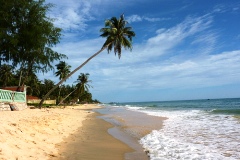
Phu Quoc, a sleepy tropical island off Vietnam's southwest coast, in the Gulf of Thailand, is 220 square miles of near-empty white-sand beaches, unpaved roads, and simple bungalow-style guesthouses, with a population unperturbed by the forces of mass tourism. The handful of foreign visitors who've been there say it's the exact opposite of places like Phuket—and yet, "the next Phuket" is exactly what the Vietnamese government is hoping Phu Quoc will become.


A master plan unveiled by Prime Minister Nguyen Tan Dung in May 2010 envisions a world-class tourism center with an international airport (already under construction), cruise ports, casinos, a business and finance hub, and seven million tourists by 2030. That's quite a change from the 162,000 visitors the island received in the first eight months of 2009. The government insists that sustainability and preservation are part of the plan.


If you go: Mango Bay, on Long Beach, maintains the low-key Phu Quoc vibe with 31 bungalows made from local materials and furnished with mosquito-netted four-poster beds and solar showers.


Saugatuck Dunes, Michigan


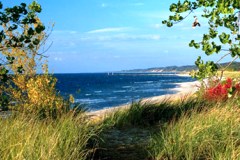
Saugatuck is only 90 miles by boat from Chicago, but a visit to the classic resort town is like a step back in time. Among its many charms are beaches distinguished by the rare freshwater dunes formed by the waves of Lake Michigan. "Right now, you can see the dunes very much as Europeans saw them 200 years ago," says David Swan, president of the Saugatuck Dunes Coastal Alliance. Yet they may be in peril. The issue: a development proposed for a parcel of beachfront just outside the gates of Saugatuck Dunes State Park.


While the developer maintains that preserving the local culture and ecology are its top priorities, critics contend that the plan to build about 30 homes, a nine-hole golf course, a 66-slip marina, and a small hotel and condos heralds a drastic and deplorable change. Among the worries: The hotel's nine-story tower would forever alter a landscape that has drawn artists for centuries, and the construction will harm the fragile ecology of the 200-foot-high dunes. Local zoning laws prohibit anything of the scale being proposed, but the developer has filed a series of lawsuits to change them. In response, Saugatuck residents recently voted to raise taxes for a legal defense fund. Meanwhile, the National Trust for Historic Preservation named Saugatuck Dunes on its 2010 list of the country's most endangered historic places, and the developer has threatened to sue for defamation. Much of the shore remains protected, including Oval Beach, its best-known stretch, and an adjacent parcel the developer sold back to the municipality and state for conservation. But the rest of the shoreline—and the future of the town—hang in the balance.


If you go: Stay at the Sea Suites Boat & Breakfast, an inn located on a 105-foot houseboat docked right outside town. It has four large air-conditioned suites with private baths, and a hot tub on the top deck.


Morocco, North Africa


You'd think that a desert country like Morocco would have enough sand for everyone. But at least a few parties feel the need to steal sand from Morocco's Atlantic beaches. Yes, steal it—by literally bulldozing dunes, trucking the sand away to make cement, and leaving behind ugly lunar landscapes.


Coastal Care, a U.S.–based environmental organization that advocates for the world's beaches, has found destructive sand mining operations in over 30 countries, as far afield as Cambodia, Jamaica, and Australia. But its co-founder, Olaf Guerrand-Hermès, believes that the situation is worst in Morocco, where hundreds of miles have been mined for decades, particularly along the stretch of Atlantic coast between Tangier and Casablanca. Outside the small seaside towns of Larache and Kenitra, for instance, dunes have been completely bulldozed. According to Guerrand-Hermès, who has a home in the area, the sand-mining business is run by a syndicate second in size only to Morocco's drug mafia. The Moroccan government has designated Larache as a target for major resort development, but the large-scale removal of sand makes the beaches unsuitable for tourism. It also ruins turtle and seabird nesting areas and exacerbates erosion problems by removing nature's defenses against storms.


If you go: The northern Moroccan coast—a stretch Budget Travel has called the "next French Riviera"—is still being discovered by visitors. Asilah is known for its restored whitewashed walls and narrow streets; less-polished Larache has a bustling medina and still-intact beaches. Stay at the Hotel Al-Khaima, just outside Asilah and directly across from a gorgeous stretch of sand.


Mullins Bay, Barbados


Most islands in the Caribbean suffer erosion to a certain degree, much of it from natural causes. Barbados, a country dependent on tourism, knows it needs to protect its beaches, but some of its attempts to do so end up making matters worse. Local environmental activists contend that in several places along Barbados's west shore—the famed Platinum Coast, lined with luxury hotels, condos, and expensive homes—erosion has been exacerbated by the construction of seawalls and groins.


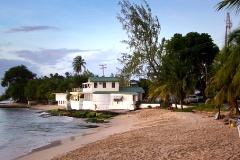
On the island's northwest coast, sunbathers used to be able to walk from the popular beach bar on Mullins Beach north for several miles up the sandy shore. Now, there are only impassable boulders, sea walls, and crashing surf. The author of the local Mullins Bay blog blames the construction of three stone groins at St. Peter's Bay, a new condominium development a quarter mile north of Mullins Beach. Installed ostensibly to help build up the beach there, the structures have sapped the adjacent shoreline of sand. Surprisingly, Barbados's Coastal Zone Management Unit, a government agency charged with controlling erosion, approved the groins. It maintains that global warming is the main culprit in the island's erosion problem. Rising sea levels and severe storms certainly play a role, but to protect its shoreline, Barbados also needs to balance the demands of development and preservation.


If you go: Barbados's east coast is less developed but not unfamiliar with the power of the sea. The Crane Resort owes its pink sand beach and spectacular cliff-top position to the waves that crash onto the shore.


Gulf of Mexico


While BP's Deepwater Horizon well was spewing millions of barrels of oil into the Gulf of Mexico this summer, predictions for the area's beaches were dire: sand covered in tar, sea life destroyed, water too toxic for swimming. The reality, thankfully, has turned out to be much less horrific. While there are still occasional reports of tiny tar balls or dead birds on beaches in the Florida Panhandle, Alabama, Mississippi, and Louisiana—and the full impact of the oil spill on the Gulf's ecology is still unknown—most of the region's beaches are still in good shape. But the Gulf's beaches are still under grave threat from the perception that the problem is much, much worse.


Respondents to a recent survey by Travelocity erroneously believed that the spill had affected locations as far afield as Cancún, the Florida Keys, and Miami, which is on the Atlantic Coast (landlocked Orlando was cited by 4 percent). "It reminds me of Mexico last year, when the border cities were having issues with drug-related violence, but the negative perceptions affected destinations all around Mexico," says Genevieve Shaw Brown, senior editor of Travelocity. Estimates of the economic impact on tourism are forthcoming, but innkeepers, fishing captains, and rental agents are already calling 2010 the "lost summer."


If you go: Many Gulf Coast hotels are guaranteeing an oil-free vacation: If a beach is closed within 20 miles of where you're staying, and you prefer to cancel, they'll refund your money. Participating hotels are listed at www.travelocity.com/oilspillinfo.

Millionaire's gift sparks Web curiosity 0

xoiper | 4:53 AM |

http://howt00.blogspot.com/

What in the heck is a wombat? That's the question that a lot of very jealous people are sure to ask after learning about a man who left a considerable fortune to the Wombat Awareness Organization.

Australian news outlets have gone wild about the story of an American man who left $8 million to the "non profit organisation specialising in large scale rescue and rehabilitation of the Southern Hairy Nosed Wombat." The donation will come in $1-million-per-year increments, starting next year. His family has asked, perhaps not too surprisingly, for anonymity.

As Forbes.com writes, the man visited the organization several years ago and went on a tour of the surrounding areas, where he was shown wild wombats that had been injured, starved, or diseased. A rep for the group says the man was clearly moved by what he saw, and he never forgot the experience. Years later, a little-known organization is $8 million richer.


PHOTO PROVIDED BY THE CHICAGO ZOOLOGICAL SOCIETY'S BROOKFIELD ZOO. 2007

The organization's mission (which is about to get a lot easier) is, in their words, to promote "conservation and protection of fragmented (wombat) populations, developing new co-existence plans for landowners, lobbying for tougher regulations on culling and undertaking research into public opinion."

The news spurred tremendous Web interest in the animals. Online lookup on "wombats" nearly doubled in 24 hours, and related lookups on "wombat pictures" surged into breakout status.

So, what exactly is a wombat? According to the official site of the Wombat Awareness Organization, the animals, native to Australia, are "chubby, nocturnal, burrowing marsupials." Unfortunately for the wombats, they can be quite destructive to farmland, which is why they are often the target of fed-up land owners. There are regular reports of wombats being abused and killed, a top reason why saving them is a popular cause.

This isn't the first time animals or animal organizations have been included in a wealthy person's will. Hotel icon and "Queen of Mean" Leona Helmsley famously left $12 million to her dog Trouble in 2007. Amazing, but $12 million is dog food compared to what a German Shepherd named Gunther III inherited in 1992. His owner, German countess Karlotta Libenstein, left the pooch $60 million. When Gunther III died, the fortune went to -- you guessed it -- Gunther IV.

Of course, the generous gift to the Wombat Awareness Organization is quite different. It aims to help a species, not just one spoiled animal. All in all, not a bad day to be a wombat.

Forbes names richest people in America 0

xoiper | 4:32 AM |

http://howt00.blogspot.com/

The Forbes 400 regained lost ground in 2010, while most were still smarting from the recession.

It has been a year of reclamation for America's richest. The total worth of the Forbes 400 was up 8% to $1.37 trillion, well out-earning the 1% rise in the S&P over the same period of time. More than half (217) are richer than they were a year ago.

The headline number tells a partial story. Just over one-third of the 400 failed to add to their fortunes or lost ground. Still far above us is the record of $1.57 trillion in total net worth set in 2008.

More at Forbes.com:

icahn_150x110.jpg
America's Wealthiest
Zuckerberg.jpg
Youngest American Billionaires
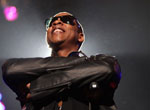
jayz.jpg
Billionaires In The Making

But the very top of the list gained, as good friends Bill Gates and Warren Buffett were up $4 billion and $5 billion, respectively. They, too, are short of their personal highs. Gates, who in March lost his title of world's richest person to Mexico's Carlos Slim, is still America's richest person — for the 17th year in a row.

Las Vegas gaming tycoon Sheldon Adelson was the kid, or "comeback adolescent," as he calls himself. "I'm too old to be a kid," he told Forbes. The largest shareholder of Las Vegas Sands (NYSE: LVS - News) is the year's biggest dollar gainer. His casino's shares are up 1,500% since their 2009 low. Adelson is now the 13th richest American, worth $14.7 billion, up $5.7 billion from last year — though nowhere close to his $28 billion net worth in 2007, when he ranked third among Americans.

The biggest gainer in percentage terms is Mark Zuckerberg, who more than tripled his fortune to $6.9 billion. The more conservative private valuation of Facebook is now around $23 billion; illiquid shares in the secondary markets point to an even richer valuation. Two of his cofounders are in the ranks for the first time: Eduardo Saverin and Dustin Moskovitz, both classmates of Zuckerberg's at Harvard. Moskovitz, who is eight days younger than Zuckerberg, now has bragging rights as the world's youngest billionaire. The Facebook cofounders are among 16 newcomers on this year's list. Other notables include Dean Metropoulos, whose private equity firm recently bought Pabst Brewing; Terrence Pegula, who sold his Pennsylvania mining outfit to Royal Dutch Shell (Nasdaq: RDSA - News) for $4.7 billion in May; and Elaine Wynn, whose divorce from casino magnate Steve Wynn was finalized in January.

The price of admission to the 400 is back up to the $1 billion mark. Last year it was $950 million, the first time since 2005 it had fallen below 10 figures. The most notable of the 18 returnees is Ford Motor (NYSE: F - News) scion William Ford Sr., who made the cut after a four-year absence as the automobile company's stock hit five-year highs.

Thirty-four people fell from the ranks, a number of whom just barely missed the cut. At least two saw their fortunes unravel. Tamir Sapir, a former taxi driver who built a real estate fortune, owes at least $340 million for nonpayment of loans, his creditors say. He may be suffering from deteriorating mental condition. Hedge fund chief Raj Rajaratnam faces insider trading charges.

Nine of the drop-offs fell off the list permanently. John Kluge passed away this summer. He was America's richest man from 1989 to 1991, before losing the title to Bill Gates. Yankees owner George Steinbrenner died in July just after his 80th birthday.

Our estimates of public fortunes are a snapshot of wealth on Aug. 25, 2010, the date we locked in net worths and rankings. We have not included dispersed fortunes (as in those of the Du Ponts) when individual net worths are below our minimum. But we do include wealth belonging to a member's immediate relatives if the wealth can ultimately be traced to one living individual; in that case, "& family" indicates that the number shown includes money belonging to more than one person.
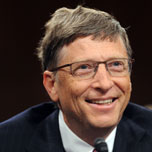
Bill
Tim Sloan/AFP/Getty Images

1. Bill Gates

Net Worth: $54 billion

Source: Microsoft

Residence: Medina, Wash.

Age: 54

The software king is not the world's richest man but that's because he is the most generous person on the planet: To date he has cut checks totaling $28 billion. (Even so, Gates is still America's richest person, topping The Forbes 400 for the 17th straight year.) Most of his donations have passed through his Bill & Melinda Gates Foundation, which now has a $33 billion endowment, including contributions from his buddy and bridge partner Warren Buffett. The foundation has given money for the prevention of 5 million deaths from AIDS, malaria and tuberculosis; now it's undertaking the eradication of polio. It is also fighting hunger by helping 400,000 farmers in Asia and Africa with rice varieties that resist cold, flooding and drought, and by giving 100,000 farmers on those two continents access to small-scale and cheap irrigation systems. As the foundation accelerates, Microsoft is stuck in neutral. Gates' stake in the company he cofounded is now worth $16 billion; its stock is flat over the last year, despite the release of a new Windows operating system and heavy investments in online advertising and games. Gates regularly sells shares in the software giant, pouring proceeds into investment outfit Cascade, which accounts for 70% of his wealth. Other investments include trash-collector Republic Services, investment firm Gamco, AutoNation and an inflation-hedging fund.
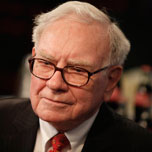
Warren
AP Photo/Seth Wenig

2. Warren Buffett

Net Worth: $45 billion

Source: Berkshire Hathaway

Residence: Omaha, Neb.

Age: 80

Along with bridge partner Bill Gates, the Oracle of Omaha is coaxing America's richest to pledge half their fortunes to charity. "You keep making the list, I'll keep milking it." Buffett plans to give away 99% of his wealth to the Bill & Melinda Gates Foundation and the Buffett children, and it all has to be spent 10 years after he's gone. "Too often a vast collection of possessions ends up possessing its owner. The asset I most value, aside from health, is interesting, diverse and long-standing friends." Buffett's Berkshire Hathaway continues its capital stewardship excellence, beating the S&P by 15 percentage points over the past 12 months. Secret to success: emotional stability. "When you come to a conclusion, you have to really not care what other people say." Buffett faked breathing problems when he was 12 so he could move back to Omaha from Washington, D.C., where his father was a freshman congressman. He had read every book about investing in stocks in the Omaha Public Library by the time he was 12. He met value investor Benjamin Graham at Columbia; bought textile firm Berkshire Hathaway 1965, and transformed it into massive holding company: food, insurance, utilities, industrials. Buffett acquired railroad giant Burlington Northern Santa Fe for $26 billion in 2009.
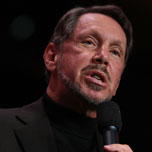
Larry
Justin Sullivan/Getty Images

3. Larry Ellison

Net Worth: $27 billion

Source: Oracle

Residence: Woodside, Calif.

Age: 66


The Oracle chief brazenly chastised Hewlett-Packard for ousting its former head Mark Hurd over his relationship with a marketing contractor. Then he turned around and hired Hurd weeks later to replace Oracle's co-president, Charles Phillips, who resigned at the same time. HP sued Hurd, prompting Ellison to say that HP was making it "virtually impossible" for the 2 companies to do business together. (The two parties recently settled). Oracle, which has acquired 66 companies over the years, figured out a way to turn a profit on its latest big buy, Sun Microsystems, in 2010. One of the highest-paid executives in the country, Ellison has gotten $960 million in compensation in the past 5 fiscal years, mostly from the exercise of stock options; he recently cut his salary to $1. Ellison's fortune is almost entirely tied up in Oracle; he also owns a $580 million stake in Web business-software outfit Netsuite and is one of the largest private land owners in celebrity haven Malibu, Calif. Ellison has 2 houses in the Bay Area: Japanese-style compound in Silicon Valley and bay-view mansion in San Francisco. An avid yachtsman, Ellison spent a decade and over $100 million on his quest for the America's Cup, which he finally won in February. He beat his Swiss rival Ernesto Bertarelli, thanks in part to a trimaran with a rigid main sail longer than a Boeing 747's wingspan. Now he's deciding where to take the next Cup, said to favor backyard, in San Francisco. He intends to give 95% of wealth to charity.
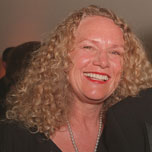
Christy
L. Matthew Bowler

4. Christy Walton & Family

Net Worth: $24 billion

Source: Wal-Mart

Residence: Jackson, Wy.

Age: 55

The widow of John Walton inherited her wealth after the former Green Beret and Vietnam war medic died in an airplane accident near his home in Wyoming 2005. She got an extra bump in her fortune because of her late husband's early investment in First Solar; shares up more than 400% since 2006 initial public offering. But bulk still comes from her shares in Wal-Mart, the retailer founded by her father-in-law Sam Walton and his brother James in 1962. Today Wal-Mart has sales of $405 billion, and employs more than 2.0 million people. The philanthropist supports museums, education and organic gardening.
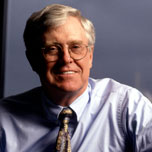
Charles
John Choiasson/Getty Images

5. Charles Koch (tie)

Net Worth: $21.5 billion

Source: manufacturing, energy

Residence: Wichita, Kan.

Age: 74

Since inheriting control of the refining business of his dad, Frederick, in 1967, Charles Koch has expanded the Wichita conglomerate more than 100-fold to $100 billion in revenues; it is now the second-largest private company in the U.S. behind Cargill. Biggest deal to date: The $21 billion purchase of building-products maker Georgia Pacific right before the housing market crashed. Charles and brother David bought out sibs Frederick and William for $790 million in 1983. Each year Charles and David reinvest 90% of profits in the business, with enough left to pour hundreds of millions of dollars into their pet charities and causes, a mix of libertarian think tanks and New York City arts institutions. Most recently they angered California Governor Arnold Schwarzenegger by giving $1 million to help efforts to overturn the state's climate change regulations.
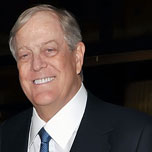
David
Slaven Vlasic/Getty Images

5. David Koch (tie)

Net Worth: $21.5 billion

Source: manufacturing, energy

Residence: New York, N.Y.

Age: 70

More gregarious than his brother Charles, David Koch may have made his shrewdest decision in 1983 when he kept his stock in Koch Industries instead of selling out like his brothers William and Frederick, who got about $790 million for their stakes. Since then the company has expanded rapidly and now is worth more than $50 billion; it has interests in pipelines, refineries, Lycra, Dixie Cups. David, who was the Libertarian Party's candidate for vice president in 1980, restricts his political activities now mostly to supporting conservative think tanks and activist organizations. Most recently he and Charles angered California Governor Arnold Schwarzenegger by giving $1 million to help efforts to overturn the state's climate change regulations. From his home base in New York City he runs Koch's chemical technology group. He and his wife, Julia, are also active on the charity circuit and have given or pledged $600 million, mostly to cancer research and the arts since 2000; he sits on 26 nonprofit boards.

Jim
AP Photo/April L. Brown

7. Jim Walton

Net Worth: $20.1 billion

Source: Wal-Mart

Residence: Bentonville, Ark.

Age: 62

Jim is currently chairman and chief executive of family's Arvest Bank; also chairs local newspaper company Community Publishers। Sam Walton's youngest son has served on Wal-Mart's board of directors since brother John's death in 2005. While Wal-Mart's shares are nearly flat over the past year, the 3 children of the founder collected $1.2 billion in dividends. A former clerk, Sam Walton (d.1992) founded Bentonville store with brother James 1962; today Wal-Mart has sales of $405 billion, employs more than 2.1 million people.

Alice
AP Photo/April L. Brown

8. Alice Walton

Net Worth: $20 billion

Source: Wal-Mart

Residence: Fort Worth, Texas


Age: 61

Alice is building Crystal Bridges Museum of American Art in Bentonville. The daughter of Wal-Mart founder Sam Walton (d. 1992), she was an equity analyst after college and later formed investment bank Llama Co. and led the creation of Northwest Arkansas Regional Airport. While Wal-Mart's shares are nearly flat over the past year, the 3 children of the founder collected $1.2 billion in dividends. A former clerk, Sam Walton (d.1992) founded Bentonville store with brother James 1962; today Wal-Mart has sales of $405 billion, employs more than 2.1 million people. The horse lover also runs Texas' Rocking W Ranch.
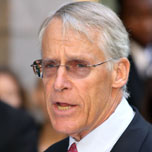
S.Robson
Donald Bowers/Getty Images

9. S. Robson Walton

Net Worth: $19.7 billion

Source: Wal-Mart

Residence: Bentonville, Ark.

Age: 66

S. Robson has been chairman of Wal-Mart since his father's death in 1992. Columbia Law grad joined Wal-Mart in 1969. Positions held: senior vice president, secretary and general counsel, and vice chairman. Today Wal-Mart has sales of $405 billion, employs more than 2.1 million people. While its shares are nearly flat over past year, the 3 children of the founder collected $1.2 billion in dividends.
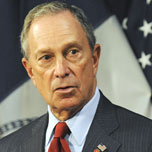
Michael
AP Photo/Marc A. Hermann

10. Michael Bloomberg

Net Worth: $18 billion

Source: Bloomberg LP

Residence: New York, N.Y.

Age: 68

America's richest politician Michael Bloomberg's campaign spending record of $109 million was just surpassed by Meg Whitman in September. He is serving his third term, set to expire in 2013, after successfully campaigning for extended term limits in 2008. The Boston-born son of a Russian immigrant accountant is registered as an Independent, but he is a social liberal; in a recent address, he said: "I'm pro-choice. I'm pro-gay rights. I'm pro-immigration, I'm pro-gun control. I believe in Darwin." Outside of politics, Mayor Mike owns an 88% stake in Bloomberg LP, the data analytics firm he founded in 1982 after being fired from Salomon Brothers ("Living well is the best revenge," he recently said of his multi-billion dollar turnaround). While other financial media firms have been cutting jobs and selling titles, Bloomberg is on a growth spurt. Firm, which operates about 290,000 data terminals, has increased its employee head count by 25% over the last three years; picked up BusinessWeek for less than $5 million. Overall revenues are up an estimated 10% this year to $6.9 billion, thanks in part to the company's expansion into the legal data field. Bloomberg has given over $1.4 billion to charities over the years; causes include anti-smoking, public health and the arts. In a letter accompanying his pledge to donate the bulk of his net worth along with Bill Gates, Warren Buffett and other billionaires, he explained why he chooses to give money now rather than bequeath his fortune: "Why wait? Why deny financial aid to this generation? Why deny a possible cure for a disease to this generation?"

Sergey
Courtesy of Google

11. Sergey Brin (tie)

Net Worth: $15 billion

Source: Google

Residence: San Francisco, Calif.

Age: 37

Google cofounder Sergey Brin saw company stock dip slightly over the past year amid renewed onslaught from Microsoft. Feeling pressure as Internet ad sector matures. Brin focuses on raising margins with Instant Search and building new businesses in communications. He emigrated from Russia at age 6. Son and grandson of mathematicians on his father's side, mother was a research scientist at NASA. He met co-founder Larry Page in computer science Ph.D. program at Stanford and dropped out in 1998 to start Google from a friend's garage. The two share a 767 jet. Brin is also an investor in Airship Ventures and private space travel company Space Adventures. Brin has become a benefactor for research into Parkinson's disease, after finding out he has a genetic mutation increasing the odds he'll get it. (His wife, Anne Wojcicki, is the cofounder of personal genetics company 23andMe, through which he learned of his condition). Brin practices diving, yoga and acrobatics to lower odds he'll develop the disease.

Winners and losers from the Panic of '08 0

xoiper | 4:28 AM |

http://howt00.blogspot.com/


Two years ago this week, the financial world watched in horror as Wall Street imploded, taking much of the global economy with it.

In the past 24 months, the markets have recovered big chunks of their losses. As it turns out, the government bailouts, guarantees, direct investments, and loans prevented a collapse and created the conditions for a market and economic recovery, however shaky.

The conventional wisdom may hold that the banks won while taxpayers and consumers lost. But the Panic of 2008 left behind a legacy: heightened investor skepticism, new regulations, and a shrunken (if not humbled) financial sector. And there were (and are) plenty of losers in the financial world. So far this year, 125 banks have failed, according to the Federal Deposit Insurance Corporation.

Today, the post-bust Wall Street looks more like the final episode of the long-in-the-tooth reality show Survivor, in which even the winner looks haggard.

Winners

JamieDimon.jpg
AP Photo/Lawrence Jackson
In this April 3, 2008 photo, then JP Morgan Chairman Jamie Dimon, left, and then Bear Stearns president Alan Schwartz testified in D.C.

J.P. Morgan Chase and its CEO, Jamie Dimon, was the Last Man Standing, as the title of the fine book by Duff McDonald suggests. History teaches you should always bet on the one consolidating after the bust. That's the path followed by J.P. Morgan Chase (NYSE: JPM - News), which avoided the worst of Wall Street's reckless lending and built a strong balance sheet before the deluge.

In March 2008, with help from the Fed, Dimon scooped up Bear Stearns on the cheap; six months later, he nabbed a stricken Washington Mutual. With long-term rival Citi in trouble, J.P. Morgan emerged from the rubble as the biggest, baddest banker in Manhattan — and the country. While earnings have rebounded smartly — $4.8 billion in the second quarter — the stock trades essentially where it did two years ago.

SF-based Wells Fargo followed the J.P. Morgan Chase playbook, albeit on a smaller scale and with a bit of a lag time:

• Expand after the bust (the big October 2008 takeover of ailing Wachovia)
• Raise a big chunk of capital during tough times
• Raise more cash and pay back TARP funds quickly
• Take advantage of cheap money from depositors and the Fed to mint large profits

Wells Fargo shares (NYSE: WFC - News) are still below their September 2008 levels, near $35, but have more than tripled from the March 2009 lows just above $8.

Walking Wounded

citi_logo.jpg

Goldman Sachs, the bank everybody loves to hate, seemed to be one of the winners in the fall of 2008. The government funneled cash into AIG so it could make Goldman whole on credit default swap deals, and Warren Buffett stepped in with a timely vote of confidence (and cash). But the company failed to grasp that humility — not its traditional arrogance — was the order of the day. At around $152, Goldman shares (NYSE: GS - News) are trading above the level of two years ago but are down significantly from the October 2009 highs above $190.

Big bonuses, cringe-inducing statements from CEO Lloyd Blankfein, and the $550 million settlement of an SEC suit accusing it of deceiving customers have tarnished the Goldman name while lower leverage + customer skittishness = lower profits. (Maybe it should be known henceforth as Silver-man, Sachs?)

KenLewis.jpg
AP Photos/Bebeto Matthews
In this Sept. 15, 2008 photo, then Merrill Lynch Chairman and CEO John Thain, left, and Bank of America Chairman and CEO Ken Lewis shake hands following a news conference in New York. That day, Bank of America bought Merrill Lynch in a $50 billion deal.

When Bank of America CEO Kenneth Lewis acquired investment bank Merrill Lynch, in September 2008, the southern banker thought he had got one over on New York's frequently insular financial community. The joke turned out to be on the out-of-towner, though. Merrill was sitting on billions of dollars in losses from funky securities, and Bank of America had to turn to Treasury for extra assistance in the form of an asset guarantee. Lewis wound up losing his job (he was replaced by Brian Moynihan). Still, Bank of America has emerged in decent shape; this isn't a bad time to have a huge retail bank lashed to a still-large investment bank.

Like many of its peers, Bank of America saw its shares fall over 90% from their pre-crisis levels. But the stock (NYSE: BAC - News) has recovered dramatically from the dark days of March 2009.

Warning sign: reports suggest that the markets' spring and summer swoon may lead to a culling of its herd of investment bankers.

Morgan Stanley, the only other big New York-based investment bank to survive the debacle, managed to avoid many of the negative headlines that stuck to its peers. It transformed into a commercial bank, reduced leverage, changed leadership, paid back TARP funds, and has seen its stock (NYSE: MS - News) rise to pre-crisis levels. Now it can focus on what it does best — worrying about how to match Goldman's results.

In Rehab

citi_logo.jpg

During the early phase of the financial crisis, Citigroup occupied its own private island of incompetence. The bank's clueless leadership loaded up on on every type of poorly performing asset — subprime loans, CDOs, private equity loans, off-balance sheet conduits, you name it. While its smaller peers required temporary assistance from the government, Citi has needed intensive care, surgery, and extensive physical therapy.

Two years later, a shrunken Citi is almost walking under its own power. CEO Vikram Pandit has hived off unwanted assets into Citi Holdings, which is holding one of the great garage sales in modern history. And the Treasury Department, which converted $25 billion of assistance into common shares, at $3.25 a pop, is slooooowly selling them off. The good news: Citi's stock has nearly quadrupled from its March 2009 low (NYSE: C - News) The bad news: it would have to quadruple again to regain its pre-Sept. 15, 2008 level.

AIG_logo.jpg

AIG may be one of the only three-letter swear words in the English language. Thanks to its habit of selling massive quantities of credit insurance on all sorts of assets without adequate reserves, AIG came out of nowhere to emerge as the bailout king. The Treasury and the Federal Reserve pumped $180 billion into the company — more than $120 billion of which remains outstanding — and the company became the focus of much of America's anti-Wall Street populist rage.

But a funny thing happened on the way to oblivion: AIG's boring, underlying insurance businesses stabilized and its stock became a favorite of the momentum crowd in 2009. The shares (NYSE: AIG - News) have since leveled out. But as I noted this spring, the reflation of financial assets and a healthy dealmaking environment might allow taxpayers to recoup much of their "investment" in AIG.

Comatose — but Still Living Large!

The failure of Lehman Brothers helped set up the cataclysmic events of September 2008. The firm was carved up quickly — Japan's Nomura and the U.K.'s Barclays picked up some of the pieces — and the name brand swiftly sunk. And so Lehman instantly lost the ability to do what Wall Street firms do best — pay high salaries to financial services professionals. But its carcass has proven that it still has some skills in that regard. As Bloomberg reports, Lehman Brothers has paid out more than $900 million to professionals working on the firms' bankruptcy.

The Toxic Twins

We're left (sigh) with Fannie Mae and Freddie Mac — literally. For decades, the two mortgage giants provided immense benefits to Americans. Able to borrow money at low, quasi-government guaranteed rates, Fannie and Freddie passed along tens of billions of dollars in savings to homebuyers. Since the two firms were nationalized in the fall of 2008, Americans have essentially been giving all those gains back to the firms' creditors -- and then some. (The cost: $148 billion and climbing.)

Private companies no longer, Fannie and Freddie have emerged as key players in the government's (so-far fruitless) battle to shore up the housing and mortgage markets. To a large degree, the toxic twins are the mortgage market. Two years after the passage of the TARP, taxpayers continue to bail out the people who lent money to the firms that lent money to homebuyers.


how to Copyright © 2010 Prozine Theme is Designed by Lasantha Home | Privacy Policy | RSS Feed | Comment RSS