How to make Monopoly more exciting 1

xoiper | 1:05 PM |

Just how did Monopoly get to be such a classic?

Monopoly

Played by the standard rules, it’s a terrible game; a shallow, tedious, confrontational waste of far too much time. But somehow it’s the most played board game in the world, according to Hasbro.

So chances are your family games closet has one (or more) of the various editions of this classic. Most likely, it’s pushed to the back, where it’s been hanging out ever since that unfortunate incident between Aunt Grace and Grandpa over the hotel on Park Place. They’re still not speaking. But the less said about that, the better. If you’ve got the hankering to pull it out again, here’s a few ideas for how to get the monotony out of your Monopoly.

Set a time limit

If you do nothing else, do this: decide when your game’s going to stop, and stick to it. You can set a hard time limit (although you might have to deal with players deliberately running down the clock) or set a ceiling on the number of turns the game will run. Once you hit the end, call the game, total up assets, and declare the victor.

Free Parking

What happens when you land on “Free Parking?” According to the rulebook, absolutely nothing. Many players introduce a rule whereby if you land on the “Free Parking” square you collect a fixed sum of cash, the accumulated Chance and Community Chest winnings of the other players, or some other windfall. Don’t do this. Putting more cash in circulation is exactly what you don’t want to do in Monopoly, especially when it’s dished out according to the whim of the dice. You’ll just end up prolonging the game, and making the game even more luck-based than it already is.

Closed-bid auctions

Some players find Monopoly’s auction process tiresome, time-consuming, or intimidating. If that’s the case with you, just switch to a closed-bid system. Have every player write down their top bid on a piece of paper and hand them to the banker -- the top bidder wins, and pays the amount the second highest bidder wrote down.

Raise the prices

Often, Monopoly players find there’s just too much money flying around. If you’re playing with a big bankroll, there’s even less strategy to the game; purchasing decisions become trivial, and considering they’re the only decisions you’ll be making for most of the game, that’s a big loss. Try increasing the face prices of all properties by 50 or even 100%, and keep all other monetary values (including mortgage prices) where they are. If your cash doesn’t go as far, you’ll have to think much harder about where to spend it.

Auction off the first turn

In Monopoly, the player who goes first knows he or she isn’t going to wind up paying rent. Conversely, the player who goes last is likely to find many of the starting row properties already owned -- and is likely to wind up with a bill to pay. Here’s a way to level the playing field: have all the players bid for the first-place opportunity with some of their starting cash.

Monopoly

Ditch useless utilities

No smart Monopoly player buys the utilities. Make them worthwhile by turning them into a fifth and sixth railroad. Keep the cost the same as the other railroads, and increase the rent values proportionally for players holding five or six.

Barter

Many Monopoly games adopt this rule as the game wears on, as adding a human dimension to the game deepens its strategy enormously. Under this rule, all deals between players are fair game. Want to lend money and charge interest? Go ahead. Trade properties for a Get Out Of Jail Free card? Sure. Give another player free rent on all your properties, or arrange a profit-sharing deal? Go nuts. Just be prepared for an engrossing session of skulduggery and backstabbing.

Make your own cards

Ever thought your Monopoly game would be livened up by a housewrecking elephant? What about a property boom that doubles prices for the next round? Make your own sets of Chance or Community Chest cards, and you can make your wildest dreams come true. As long as they involve Monopoly boards, that is.

6 signs you've made it to the middle class 0

xoiper | 1:04 PM |

Not so long ago, most people viewed the hallmarks of success as something along the lines of a house, a white picket fence, two weeks vacation, two children and the ability to send those kids to college. Today, the middle class is a vanishing breed according to nearly every survey and statistic on the topic. Its disappearance is of such grave concern to the fabric of American society that the U.S. government launched a task force to explore the issue. Despite all of the attention to the subject, defining "middle class" remains a challenge, as everyone wants to be in the middle regardless of their income. Instead of focusing on the dollars, let's take a look at the lifestyle benchmarks that define middle class status.

Have You Made it to the Middle?
A wide variety of numbers have been thrown around in an effort to define the middle. People earning 20% of the average income and people earning 80% all claim to be part of the middle class. More than a few millionaires make the claim too. While there is no official financial standard, the middle class as defined by the government task force is characterized in terms of six financial aspirations, which we can view as benchmarks.

  • Home Ownership
    Home ownership remains the American dream. The step up from renting to owning signifies prosperity and achievement. With median home prices ranges differing by so much in different cities across the United States, the ability to achieve this goal varies significantly by geographical location. Someone earning an income in the 50% range in Detroit may not be able to afford even a small house in Los Angeles.

  • Automobile Ownership
    Owning an automobile provides freedom of movement and the luxury of avoiding the limited schedules and cramped quarters offered by mass transportation options such as buses and subways. Here again, the cost of cars varying widely, as does the kind of automobile required. For one driver, a used Hyundai will do the trick. For another, a new BMW signifies the achievement of this goal.

  • A College Education for the Kids
    Helping children get ahead in life is a primary goal for middle class families. Paying for a college education for children can cost anywhere from the low tens of thousands of dollars to hundreds of thousands. Decisions about which university of college to attend can have a significant impact on the price tag.
  • Retirement Security
    Retirement is a goal nearly everyone wants to achieve. It demonstrates success and provides a reward for decades of hard work. Once again, definitions make a difference. The amount of gold required to support your golden years will vary significantly depending on whether you want a staff of 10 at your villa in the South of France or a townhouse in Peoria, Illinois.

  • Health Care Coverage
    The ability to obtain healthcare is an important goal for middle class wager earners and their families. The high and rising cost of medical care and prescription drugs make healthcare coverage an ever-increasing need, as going without it can have serious negative financial implications in the event of a severe illness or injury.

  • Family Vacation
    The family vacation is a middle class staple. Vacations demonstrate that a family has disposable income and has been successful enough to take time away from work to focus on leisure.

What Happened on the Way to the Dream?
Globalization and technological advances began to reverse the growth of the middle class. The manufacturing base in the United States changed, as good-paying jobs in factories and heavy industries went overseas to lower-paying markets and labor unions lost much of their ability to bargain for high wages and good benefits. Later, white-collar jobs from accounting and data entry to reading medical images and answering telephones in call centers were also sent offshore. Many jobs that remained in the U.S. were eliminated by computers and other technological advancements that increased productivity.

To achieve or maintain a middle-class lifestyle, many households became two-income families. Achieving middle class goals became more difficult as employers eliminated their pension plans and defined-benefit plans, the cost of a college education continued to rise and the cost of healthcare jumped. For most of the 20-year period following 1990, the Commerce Department reports that real median income grew at a rate of about 20%, while the cost of a college education grew between 43% and 60%, the cost of housing rose 56% and healthcare costs jumped by 155%.

How to Get There
Although there are significant challenges to obtaining middle class status, there are some proactive steps that can help make the dream a reality. Budgeting is one of the most obvious. Understanding where your money goes each month can help you determine the exact makeup of the benchmarks you are trying to match. Are you looking for a Hyundai or a BMW?

Planning is another crucial step. Are the kids going to a state university or a private college? Are scholarships an option? Some savvy families find money for college by participating in programs which can aide families with the costs related to sending a child to university.

Working is another one of the requirements. A second job or a side business might be just what you need to boost your income and achieve some of your goals. Putting your money to work is also an important consideration. Investing has helped build wealth for generations. In fact, income earners ranked in the top 1% enjoyed significant increases in wealth even as the middle class fell into decline. Most of that wealth came from investments. Even if you don't have the means to invest for current income, you can take a few dollars from each paycheck and save for your retirement.

The Bottom Line
Don't underestimate the role of hard work and luck. Sometimes being in the right place at the right time or taking one particular course of action over another can make all the difference. So keep watching for opportunities and make the most of them when you find them. As motion-picture mogul Samuel Goldwyn said, "The harder I work, the luckier I get."

America's best and worst airports 0

xoiper | 1:01 PM |

Airports tend to inspire passionate feelings—passions usually bordering on loathing.

By Katrina Brown Hunt

Frequent traveler and novelist Ryan O’Reilly has a love-hate relationship with Chicago’s O’Hare Airport. “Nearly every time I’ve been through Chicago, my flights have been delayed, canceled, or both,” says the Springfield, MO, resident. “Once, my flight was delayed by six hours, and when we finally got onto the plane, we had to perform an emergency exit because the deicing truck next to it caught on fire.”


Perhaps it’s no shock, then, that Chicago’s airports scored near the bottom in the latest America’s Favorite Cities survey, where Travel + Leisure readers rated 30 U.S. cities on a variety of fronts, including food, shopping, on-time performance, and the efficiency (or potential surliness) of airport employees.


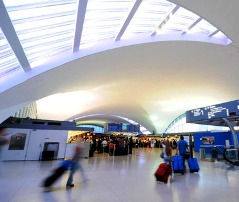
The best airports in the U.S. share a few things in common: plenty of dining options and “entertainment,” which could mean live music, kids’ play areas, spas, or—increasingly important—free wireless Internet access. Strikingly, airports that made up that lower half of the AFC airport survey tend to still charge up to $10 for you to check your email or change your Facebook status. The free wireless is one reason Oregon pharmacist Chris Carter loves Portland International Airport (No. 4), along with small niceties. “It’s easy to get in and out of,” he says, “and we love the parking garage with lights in the ceiling, showing you where open spots are.”


America's Worst Airports


#1 New York


The Big Apple has long made a tradition of outdoing its fellow American cities, and its area airports—JFK, LaGuardia, and Newark—indeed stand out, at least in terms of being miserable. Food, entertainment, on-time performance, and staff efficiency all occupy the last-place ranks in the AFC survey. The highest the NYC airports rank for anything is 28th—for airline clubs, which perhaps just serve as a comfortable place to hide until your flight finally boards.


#2 Los Angeles


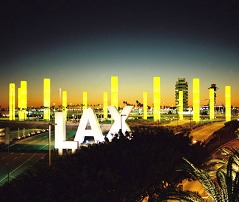
Like many things in the L.A. area, it’s all about traffic: transportation to and from the L.A. airports—from Long Beach and Burbank to the granddaddy hub, LAX—ranks a lowly No. 30 in the AFC survey. AFC readers are so over the Jetsons-style façade of LAX (No. 29 for design and functionality), and the airports’ staff rank next-to-last, too. But perhaps that’s no surprise in a city that also ranks 29th for its friendly locals—just the types to cut you off on the freeway.


#3 St. Louis


Maybe folks just miss TWA: its old home, Lambert-St. Louis International Airport, is dreary to AFC readers on a number of fronts. It ranks last for its airline clubs—you’ll find only one American Admirals Club—and its food and shopping rank 28th and 29th, respectively. Plus, you’ll pay $8 for WiFi.


#4 Washington, D.C.


In the No. 1 AFC city for historical sites and monuments, the airports—Dulles and Reagan National—score poorly in a monumental way. They rank No. 29 in entertainment, perhaps due to the fact that WiFi is still limited and comes with fees. Shopping, meanwhile, ranks 27th—picking up a “Hail to the Chef!” apron or browsing the Smithsonian Museum Store notwithstanding.


#5 Boston


Logan Airport sure does try to please travelers, with its kids’ play areas, rocking chairs, free WiFi, and even an on-site spa—but AFC voters aren’t noticing, ranking it 22nd for entertainment. Maybe they just can’t find the good stuff: Logan lands near the bottom (No. 28) for design and functionality, which includes layout and good signage, and ranks No. 25 for transportation both inside and outside the airport. Things improve once you get out of Logan’s reach, though: the city of Boston ranks fifth for its mass transit and for being pedestrian-friendly.


America's Best Airports


#1 Houston


You don’t have to be an oil baron to get the most out of Houston’s top-ranked airports—but it helps. The Texas city tops the charts for its VIP-friendly airline lounges, found mostly at George Bush Intercontinental (IAH). For everyone else, both IAH and Houston Hobby came in at No. 2 in the AFC survey for their food and drink (don’t miss the Tex-Mex or Cajun fare at local chains Pappasito’s and Pappadeaux) and second for entertainment—which may reflect that free WiFi. Best of all, Houston’s airports get the job done: they come in third place for on-time performance and second for their competent and down-home-friendly staff.


#2 Orlando


How can anyone get a case of airport angst so close to the Happiest Place on Earth? Orlando International Airport places first in the survey for airport entertainment—perhaps thanks to the pleasant atrium hangout in the main terminal. Or, it could be that window-shopping counts as entertainment. The airport’s retail (No. 2) offers a microcosm of the city’s most famous gift shops: SeaWorld, Universal Studios, Kennedy Space Center, and—but of course—a store called Disney’s EarPort.


#3 Minneapolis/St. Paul


In the city deemed most intelligent by AFC readers, Minneapolis-St. Paul International Airport wisely appeals to travelers’ basic needs of consumption: it ranked first for both food (such as local steakhouse Ike’s) and shopping (it has its own so-called Mall, which is a stone’s throw from Mall of America). The airport also offers thoughtful entertainment (No. 3): two large play areas for kids, a 1.4-mile indoor walking trail, and a designated “quiet” seating area for meditation and relaxation. The only downside: there’s a slight chance you might end up getting to your destination late (AFC voters ranked it No. 8 in on-time performance).


#4 Portland, OR


Portland International Airport (PDX) tops the AFC survey for its transportation options—plenty of people movers between concourses, and an easy hop onto the city’s light-rail system, which goes downtown. You can also do some good shopping (No. 6), without the usual fears of airport inflation. PDX promises no sales tax and “fair retail pricing”—with an emphasis on local brands such as Nike and Powell’s Books.


#5 Providence


You won’t lose your bags or your sense of direction in Rhode Island, because Green Airport is the picture of competence: it ranks first in on-time performance, first for staff efficiency, and second for its functional design, which includes good signage. You’ll likely have enough time to sit down and enjoy the offerings at the on-site oyster bar (the airport’s food ranks No. 6).


Six reasons to think twice about e-books 0

xoiper | 4:55 PM |


wsj.jpg
(Getty Images)

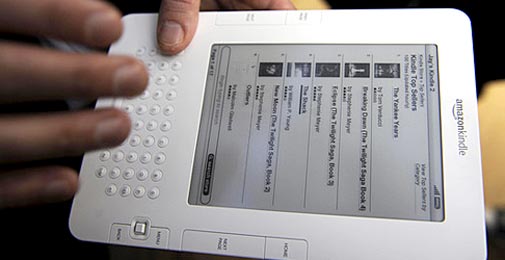
If you walk out of the cinema this week with a burning desire to read Elizabeth Gilbert's "Eat, Pray, Love," you can download it onto your Amazon Kindle electronic book reader — if you have one—for $12.99.


Then again you could just walk into your local Borders bookstore with a coupon and get the paperback for $10.

Barnes & Noble will charge you $12.99 to read the book on its e-book reader, the Nook. But it's only $9.36 (shipping may cost you extra) if you order the paperback at bn.com.

As a society, we have gadget-itis. No new machine that goes ping goes unsung. People stand in line for hours to purchase an iPhone barely distinguishable from the one already in their pockets. Amazon's newest Kindles sold out within days of going on sale. (Those who bought quickly will receive theirs this week.)

E-book readers are booming. Amazon (AMZN - News) says in the past few months sales of e-books have zoomed past sales of the paper ones. While e-books are still in an early stage—the Association of American Publishers says that so far this year they account for 8% of consumer books, compared to just 3% in 2009—the growth rate is dramatic. (This is one of the problems besetting Barnes & Noble, which has just announced a quarterly loss following a decline in sales of traditional books.)

[See The Best Android Phones on the Market]

Beyond all the hype, are e-book readers a good deal? Are they worth the money? If so, how can you get the maximum return on your investment?

Here are six money tips for pennywise book lovers.

1. Casual readers probably shouldn't bother.

The median American book-buyer purchases just seven books a year, according to an AP-Ipsos poll in 2007.

An e-book reader right now typically costs about $150 (more on this below). Even if you save a couple of bucks per book by downloading them onto your e-book reader, the payback isn't going to be much for the casual reader. If you saved $5 a book, you'd have to buy 30 just to earn back your initial investment. If you only saved $2 a book, you'd have to buy 75.

I don't want to sound negative. I happen to think e-book readers are great. But that's because I read books avidly. (I've been known to take 10 books on a beach holiday.) If you are in my camp, e-book readers let you carry a library in your pocket or bag. But if you're a casual reader, they probably don't make much economic sense yet. (On the other hand, once you buy an e-book reader you will probably buy and read more books.)

2. The books aren't as cheap as they should be.

E-books are far, far cheaper to produce, distribute and sell than paper ones. There is no paper, no printing, no trucking and no retail space.

So they should cost a lot less to buy, but the deal often isn't anywhere near as good as it should be. Amazon has tried to drive prices for best sellers down to $9.99, but the publishing industry has fought back. A lot of best sellers go for $12.99 instead. That may be cheaper than the hardbacks, but the gap should be wider.

As in the case of Elizabeth Gilbert's runaway success, you may sometimes find the traditional version cheaper. Looking for Stieg Larsson's "The Girl Who Played With Fire"? It's $7.99 on the Kindle. I bought it in Borders, with a coupon, for $5.68.

Books are cheaper in electronic format, but not all.

3. Savvy readers read the classics anyway.

Why? Because they're free. From Aesop to "Zarathustra." From "Hamlet" to "Huckleberry Finn." They won't cost you a penny. These books are outside of copyright. Just go to Gutenberg.org and download them. Thousands of them. And they're better than most of the stuff published more recently anyway.

4. Be aware of the potential costs of buying a Kindle.

Amazon sells the best-selling e-book reader. It's a great product, very easy to use—much easier, I've found, than the competition. But Amazon has given the device a cellular connection and a keyboard so you can access its online bookstore any time, any place, to buy a book. Good for them. Not so good for you. The results are predictable: You may end up making lots of impulse purchases. Don't be surprised if you spend hundreds of dollars on books in your first year. (Amazon now sells a Kindle that only has a Wi-Fi connection instead of cellular. This may save you money, as the connection will only work in a Wi-Fi hot spot. By the time you've found one, you may have decided you don't want the book.)

5. Be aware of the costs of the rivals.

The main ones are time and hassle. The many rivals to the Kindle generally use a software platform from Adobe, and it can be a pain. Even worse: Adobe provides only very basic help if things go wrong. In extremis, you may find yourself emailing India. I asked Adobe why this was. A spokesman explained that because Adobe Digital Editions was given away for free, the company only provides "a baseline level of support, which is web-based," he says. This includes "an active user forum"—in other words asking other customers how to solve your problems. Good luck with that.

If you can overcome that problem, rivals do offer benefits that may save you money. First, they let you shop around for e-books at different online bookstores, and many run promotions. Second, they will let you borrow some e-books online from your local library. Third, many of them come without any wireless connection whatsoever. That means fewer impulse purchases.

6. And if you're thinking of buying a book reader—wait!

At least, hold off for a month or two or maybe even a few weeks. Prices simply have to come down. They may do so fast.

Amazon's first Kindles went on sale three years ago for $399. Its latest versions, out this week, start at just $139. That's cheaper than rivals. They're going to have to respond.

There's an upgrade cycle going on as well. E Ink Corp., the company that makes most of the screens, has developed a newer version with somewhat sharper contrast. (Handy if you're reading fine print, but not so important for most books).

In a rational market, we should see big price cuts this fall, especially as the last of the old models go on sale. Of course, that's in a rational market. Let me know if you ever find one.

Seven healthy beverages that aren't water 0

xoiper | 4:54 PM |

you already know that drinking water is key to your health. Downing at least six cups of water daily can minimize bloating, prevent headaches, help prevent you from getting sick and smooth the appearance of wrinkles. It may even temporarily rev your metabolism, if you drink it on the cool side (72 degrees). That's a lot of benefit from a beverage you don't even have to pay for! But H20 isn't the only sip that can safeguard your health. Coffee, which some people accuse me of being addicted to, is basically liquid gold. It may lower your risk for Alzheimer's and Parkinson's, breast cancer, skin cancer, diabetes, gallstones, even oral cancer. P.S., java drinkers make half as many errors in daily life compared with decaf fans, according to a study from Cardiff University in Wales, because caffeine helps you process information quickly. It's also linked to a reduced risk for depression. Those pit stops at Starbucks aren't just perking me up—they're protecting every part of me! Not a java junkie? Read on to learn the hidden health bennies of your favorite bevy:

Orange juice
guards against heart disease. Antioxidants in OJ help protect your ticker by fighting the inflammation that can cause blood vessel damage. Consider this: People who ate fast food with a glass of orange juice had fewer artery-harming free radicals in their blood afterward than those who had their burger and fries with water, a study in The American Journal of Clinical Nutrition indicates. Isn't that a great reason to choose juice? Just watch the sugars—one cup contains 21 grams and 122 calories.

Chamomile tea
can keep you calm. People who downed chamomile extract daily for two months felt significantly less anxious, a study from the University of Pennsylvania in Philadelphia reports. Ease into mellow mode at night with a cup of chamomile tea.

Cranberry juice may prevent gum disease and urinary tract infections. Natural compounds in the juice may ward off gum disease by preventing bacteria from adhering to the teeth below the gum line. Cranberry juice also delivers 39 percent of the daily value for vitamin C per 8 ounces, raises levels of good cholesterol and keeps your urinary tract tip-top. A berry smart sip indeed!

Chocolate milk
keeps your abs flat. A glass of skim chocolate milk delivers a great combo of carbs and protein, helping you recover after a workout. Athletes who drank it post-workout had lower levels of muscle damage after four days of intense exercising than those who guzzled water or other recovery drinks, according to findings presented at the American College of Sports Medicine meeting in Seattle. That translates to less soreness and fatigue, so you can get back to the gym and those tummy-toning planks sooner. Simply stir 2 tablespoons of cocoa powder or syrup that has less than 20 g sugar into your milk and sip.

Green tea
may keep your weight steady. Mice that exercised and drank green tea were 22 percent less likely to gain weight than those who only exercised or only had tea, according to a study in the International Journal of Obesity. Polyphenols in the drink may rev your metabolism and make it easier for your body to fry fat. Plus, the tea's plentiful stash of antioxidants slashes your risk for cancer and heart disease. Try it iced in summer!

Tomato juice may lower your cancer risk! The scarlet sip is loaded with vitamins and lycopene, which protect you against cancer. Try it with spices, a celery stalk and no vodka for a cocktail any time of day!

Black tea may help fend off skin cancer. The classic brew is loaded with flavonoids, antioxidants that carry anticancer perks. Research suggests that downing a cup or more of tea a day may lower risk for squamous cell carcinoma, a type of skin cancer, by 30 percent. Hot or iced, black tea is a delicious addition to your skin care regimen—and a lovely way to wake up thanks to its caffeine content—so put on the kettle each morning!

Projects that boost a home's value fast 0

xoiper | 4:51 PM |

Labor Day looms large for homeowners. The end of summer signals that many of us will soon be immersed in an accelerated work schedule plus soccer practices, homework and other realities of back-to-school season. (Then there are football-filled Sundays that most cut into your handyman time in the fall.) But there's still time to tackle a few remodeling projects. And while your goal may simply be to freshen the appearance of your home, you also want to know that your hard work will increase your home's value.

Here are eight home improvements you can finish by Labor Day that will pay you back. Each costs less than $1,000 and should require less than a day’s work. Take a look.


1. Replace Sinks & Faucets

Estimated Price: Sink $400 & Faucet $150 For home buyers, “the kitchen is king,” says Paul Cardis, chief executive of Avid Ratings, which conducts an annual survey of more than 20,000 first-time home buyers to determine design preferences. “For those looking to spruce up their house, the kitchen is the place.” You can replace a kitchen sink and faucet yourself in a matter of hours.

Be sure to seek out low-flow faucet aerators that can reduce water usage by 30%. (Energy-efficient features, specifically, are a “must have” or are “really wanted” by 88% of home buyers these days.) You can expect to recoup 70% to 80% of the cost of kitchen-remodeling work when you sell your home.

2. Backsplashes

Estimated Price: $14 per 12 in x 12 in tile The easiest way to add pizazz to your kitchen is with a new backsplash. You can go from country to modern in a snap with a variety of options for finishes and colors. To save money, time and frustration, consider the peel-and-stick tile options now available. “They’re aesthetically pleasing and will do the job if that’s all you can afford,” says Fredda Weisbard, a real estate agent at Coldwell Banker in Boca Raton, Fla.

“It’s an inexpensive Band-Aid for updating your kitchen.” The messier grout-and-tile approach will add $50 to $100 more in related supply costs but will appeal more to prospective buyers.

3. Vanity Cabinets/Toilets

Estimated Price: Vanity $200 and Toilet $250 Even relatively minor updates to your bathroom can produce a return on investment of 172%, according to HomeGain.com’s 2009 Prepare to Sell survey of 1,000 real estate agents nationwide. Because toilets fit neatly over existing plumbing, they’re surprisingly easy to install. Look for modern water-saving models that will both save on your water bills and appeal to energy-conscious buyers when it’s time to sell.

If you’re feeling creative, save hundreds of dollars by using an old dresser as the foundation for a new vanity. Simply cut out room on the top to hold a basin sink and to connect pipes.

4. Paint

Estimated Price: $30 per paint can It’s amazing what a fresh coat of paint will do to immediately transform any room in your house. Keep in mind that lighter shades generally make a room feel larger; neutral shades will appeal most to potential buyers. “Buyers won’t be able to look past [bold] colors and see the rest of your home,” says Weisbard. You’ll earn a 250% return on your investment in freshly painted interior walls, according to HomeGain.com’s survey.

Just be sure to test colors -- Home Depot sells 8-ounce sample cans of paint for $3 -- before buying the full batch of paint needed for the room. Limit costly mistakes and spills by splurging on drop cloths and painter’s tape.

5. Crown Molding

Estimated Price: $5 per linear foot Crown molding in your home compared with none in a similar home in your neighborhood could make a difference when it’s time to sell. “You may not get the money back, but it’s a feature that most buyers appreciate when looking for a home,” says Weisbard. “It’s a wow-factor feature. It stays in buyers’ minds.”

Fair warning: Installing crown molding might be the trickiest task on our list. There’s a lot of geometry involved -- along with a nail gun and a miter saw. Follow the “measure thrice, cut once” rule to limit waste.

6. Storage/Organization

Estimated Price: $20-$500 Improvements to a home's functional space can be just as valuable as ones that make a home look better. Potential buyers like to assess space and storage area for their belongings when evaluating new houses.

Focus your efforts on the garage, basement and closets, where you can declutter easily with clear storage bins or new shelving.

7. Replace The Front Door

Estimated Price: $150-$500 As the first thing prospective buyers will see upon entering your home, a new front door will more than recoup your investment. Expect a fat 129% ROI on a steel door, according to Remodeling magazine’s 2009–10 “Cost vs. Value Report.” (Note that fiberglass models, which can cost three times as much, recoup only 65% of their cost.)

Bonus: Buy a qualifying energy-efficient door and reap a tax credit of 30% of your cost (up to a maximum of $1,500 in 2009 and 2010 combined).

8. Landscaping

Estimated Price: $300-$400 Before your visitors (and prospective buyers) even get to the door, they’ll see the front yard. It’s a critical first impression that can change the way they view the entire house. “If the outside of your home isn’t appealing, then what does that say about the inside?” Weisbard says.

You needn’t spend more than $300 to $400 in basic landscaping projects to produce $1,500 to $2,000 in added home value, according to HomeGain.com’s Prepare to Sell survey. Ninety-four percent of real estate agents who participated in the survey recommend landscaping work to sellers before they list their homes.

Go for plants -- whether they line your walkway or the front of your house -- that add color and complement your house, suggests Bruce Butterfield, market-research director of the National Gardening Association. “People react to color emotionally.” Perennials will require less maintenance year to year, and hydrangeas in particular -- Butterfield recommends the “Endless Summer” variety -- will give you several months of blooms each year. You can pick them up for about $50 each, compared with $150 or more for a new tree, which will take much longer to mature.

The world's 10 most beautiful lakes 0

xoiper | 4:48 PM |

Highest, deepest, clearest—all of these watery wonders showcase nature at its most spectacular. Soak up the views from a boat, a cable car, a trailhead, or a castle tower.


Plitvice Lake

Croatia


These 16 blue-green lakes, hidden by thick vegetation and connected by hundreds of waterfalls, could be the set for the next Jurassic Park. For adventure as well as killer views, start at one of the lower lakes and work your way up following the sturdy wooden planks that turn what could be a treacherous trek into a fun hike. Take a detour along the 10-minute loop that leads to the region's tallest fall, 230-foot-high Veliki Slap ("Big Waterfall"), a breadth of streaming white water that collects in turquoise pools. While hiking, keep your eyes peeled for deer, wildcats, boars, wolves, and bears—a more likely sighting than a T. rex.


Nearby: There are four hotels in Plitvice Lakes National Park, but most people drive in for the day from Zagreb, about two hours by car.


Peyto Lake

Canada


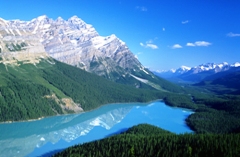
Alberta's Lake Louise is the famous one, on all the postcards and posters. But Louise's sister lake 29 miles north along Icefields Parkway, a two-laner that winds 142 miles through the Canadian Rockies, is even more picturesque. Thanks to glacial rock flour that flows in when the ice and snow melt every summer, the waters of Banff National Park's Peyto Lake are a brilliant turquoise more often associated with warm-weather paradises like Antigua and Bora-Bora. For the most dramatic views of the 1.7-mile-long stunner, encircled with dense forest and craggy mountain peaks, pull into the lot at Bow Summit, the parkway's highest point, and follow the steep hike to the overlook.


Nearby: The town of Banff, the heart of the park, is 62 miles south of Peyto Lake.


Lake Atitlán

Guatemala


Nearly a mile up in the highlands of Guatemala, Atitlán (Lago de Atitlán) rests at the foot of three massive conical volcanoes. Small Mayan villages line its shores, which are set off by steep hills draped with oak and pine trees and nearly 800 plant species. There's no single, must-see view of the lake, so try several vantage points: from up high on Highway 1; from the town of Panajachel, the buzzing market hub that juts out into the water; or aboard a lancha, one of the many small boats that ferry visitors from village to village. We're saddened to note that the lake has built up high levels of blue-green algae over the years. Last October and November, a film of green scum briefly marred its surface. But an ambitious effort to solve the problem is underway.


Nearby: Panajachel is about 2.5 hours by car from Guatemala City.


Loch Lomond

Scotland


With a backdrop of windswept rolling hills and medieval castles, Loch Lomond feels like it's straight out of a Victorian romance novel. The 24-mile-long lake is dotted with islands, some so small that they disappear when the water levels are high, and others large enough to be (sparsely) inhabited. Most ferries stop at the largest island, Inchmurrin (population 10), so visitors can get a look at the remains of a 7th-century monastery and the 14th century Lennox Castle, used often as a hunting lodge for kings.


Nearby: The lake is 24 miles north of Glasgow and 66 west of Edinburgh.


Lake Garda

Italy


If the shape of Italy is a couture boot, think of the imprint of Lake Garda as a design from the funky sister line—long and skinny at the top, opening up toward the bottom. Garda is the country's largest lake and one of the most popular vacation spots among Italians. The southern shore is home to hot springs, resort towns with pastel villas and terra-cotta-roofed hotels, and most of Garda's 28 miles of serene, pebbly beaches. To the north are the jagged peaks of the Dolomites, a magnet for hikers and bicyclists who want to test their endurance. In Malcesine, an adorable speck of a town with cobblestoned streets and a medieval castle, you can board a cable car up to Mount Baldo for one of the best aerial views of the lake.


Nearby: Lake Garda is about halfway between Milan (89 miles away) and Venice (109 miles away), but to get the full, relaxing effect, stay in one of the south shore's many small towns.


Lake Annecy

France


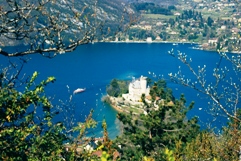
This alpine lake in the heart of the French Alps is a looker, but don't expect to spend your visit gazing over the water in quiet reflection. Lake Annecy is all about activity—particularly in August, when Paris shuts down and the French take extended holidays. Sailors, kayakers, and water-skiers crisscross the water; bikers and hikers hit surrounding nature trails; and refugees from the city fill the outdoor tables at the lakeside restaurants and bars. Repeat visitors know to plan their trip for the first Saturday of August, when a staggering, nearly two-hour-long fireworks display illuminates the water.


Nearby: The closest major city is Geneva, 30 miles north, in Switzerland, but most people stay right on the lake.


Crater Lake

United States


Thousands of years ago, the top of a 12,000-foot-high volcano in the Cascade Range exploded. The massive pit left behind became known as Crater Lake, the centerpiece of a national park in southern Oregon that displays nature at its rawest and most powerful. Forests of towering evergreens and 2,000-foot-high cliffs surround the lake, where extraordinarily deep waters—at 1,943 feet, it's the deepest lake in the United States—yield an intense sapphire-blue hue. If winter hiking and cross-country skiing aren't your thing, wait until early July to visit, when the roads have been plowed and the trails cleared. Rim Drive, a 33-mile road that encircles the lake, has picture-perfect views from all sides. For a closer look, follow the mile-long Cleetwood Cove Trail to the shore. Brace yourself before diving in: The water temperature rarely rises above 55 degrees Fahrenheit.


Nearby: The laid-back mountain town of Bend, 112 miles away, makes a nice home base for a Crater Lake day trip.


Lake Nakuru

Kenya


The water is blue enough, and the backdrop—grasslands and rocky hillsides—has the makings of a nice photo, but neither is what sets this lake in central Kenya apart. The real draw here is the mass of pink on Nakuru's edges. Flamingos are one of the few species that can withstand the lake's hostile conditions—the water has so much sodium carbonate that it burns nearly everything that touches it —and they flock to the lake en masse. There can be as many as a million birds feeding on algae in the shallows at one time, wading side by side.


Nearby: The lake is in the heart of Lake Nakuru National Park, a sanctuary for black-and-white rhinos, three hours by car from Nairobi.


Lake Matheson

New Zealand


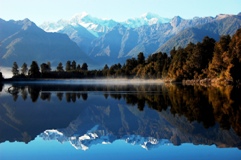
Alternately known as Mirror Lake, this South Island lake is famous for its reflections of Mount Cook and Mount Tasman. Visiting just after dawn is ideal, when the water is at its calmest and mirror images are impossibly perfect. The lake itself is well worth exploring, too. Park near the Clearwater River suspension bridge and follow the 1-mile loop past kahikatea and rimu trees, which have extra-tall trunks and fanciful bushy tops and look like something from a Dr. Seuss book.


Nearby: Fox Glacier township, a village that serves as a base camp for trekkers, is three miles east of the lake.


Lake Bled

Slovenia


Why not get to the good stuff right away? To take in this Slovenian lake's most breathtaking vista, head immediately to Bled Castle, at the edge of a sheer, 460-foot-high cliff. You'll see mountains in every direction—the Julian Alps and the Karavanke range—and below, the Alpine lake and its main attraction, Bled Island, a tiny forested circle that's home to the 17th-century Church of the Assumption and its prominent baroque clock tower. Down on the lake's shore, board a pletna boat (similar to a gondola) to the island. Be sure to ring the church bell and make a wish before returning to the mainland. Mountains shield the water from icy northern winds, so Lake Bled is warm, relatively speaking (79 degrees Fahrenheit). If that's still too chilly, head to the lake's northern section, where three hotels have built pools around natural thermal springs.


Nearby: The Slovenian capital of Ljubljana is an easy 35 miles away.

Five signs a man is interested in you 0

xoiper | 4:48 PM |

5 signs he’s into you
Having trouble figuring out your guy’s level of interest in you? Sometimes, the proof is in his body language. To understand what your honey’s movement, eye contact and even posture reveal about his true feelings for you, check out these hints from Greg Hartley, former Army Special Forces interrogator and author of I Can Read You Like a Book: How to Spot the Messages and Emotions People Are Really Sending With Their Body Language.

Five signs your date is into you…

1. He closes the distance
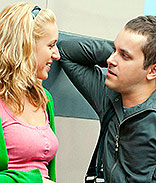
“First and foremost, moving in closer indicates a desire for more intimate contact,” Hartley says. So if a guy you’re talking to at a party inches a little closer as you talk, or your date slides into the same side of the booth as you, you know he wants to get to know you better — and not as a friend.

2. He speaks softly
When a man talks in a quieter voice, it’s an excellent sign, Hartley explains. “He’s indicating that what he’s saying is for your ears only,” he says. “If he’s telling you something private or secret, it’s a good thing — guys don’t do that to women they’re not into.” If you want to let that soft-talker know you feel the same way, respond in kind, which should quickly turn those sparks into an all-out fire. Caveat: If you’re in a loud club or restaurant where you have to shout to be heard, you can’t tell anything by his decibel level. So wait until you’re walking or driving home to see whether he’s turned the volume down.

3. He rounds his posture
Hypermasculine body language (think: swaggering walk, standing tall with shoulders back and chin up, etc.) serves to attract women from a distance. But when a guy is talking close-up with a woman he likes, he will soften, or “round” his body language, Hartley notes. If your guy’s squared shoulders cave in when he’s chatting with you, he’s indicating that he feels comfortable and secure in your presence.


4. He talks slowwwly
Like birds in a mating dance, men typically talk more slowly and softly when they are attracted to someone, Hartley explains. Of course, if he knocked back a few gigante lattes on a first date, he may be too wired (and nervous) to sound like Barry White, but give it time: if his speech starts to make you feel sleepy, he’s a goner.

5. He can’t take his eyes off you (in a good way)
So his eyes are locked on yours? As long as it isn’t a psycho stare, but rather a lingering, heavy-lidded, “Wow, you’re amazing” gaze, that guy is digging you big-time, Harley says.

…and 5 signs your date isn’t into you

1. He’s four feet away
If his motto may as well be The Police’s “Don’t Stand So Close to Me”, he’s not feelin’ you romantically, Hartley says. How do you define such a distance? “If he remains four feet or more away from you, it is a clear signal that his heart’s not in it,” says Hartley.

2. He stands at an oblique angle facing you
“Most men do not realize that when talking to another man, we stand at oblique angles, with one shoulder facing the other’s face, yet when we talk to women — especially ones we’re interested in romantically — we stand face-to-face with them,” Hartley says. If your guy’s shoulder is pointing in the direction of your face during conversation, he’s subconsciously showing disinterest or is trying to turn you off, Hartley explains.

3. He sounds like that guy in accounting
If your date is talking to you like you’re someone at the office — meaning, the pace is quick and the level of his voice is rather strong — “he’s probably just trying to keep it on a friendship level,” Hartley says. With time, you might notice a change — after all, he just might want to keep it “professional” on the first date or two while he gets to know you — but if it remains this way after a few dates, cut your losses.

4. He stares at your mouth
When a guy focuses on your lips, what he’s really trying to do is avoid eye contact, Hartley explains. “If he’s avoiding eye contact, you can pretty safely assume he’s not into you,” he asserts. If your date fixes his gaze below your face, he’s probably interested in you, but perhaps not for a long-term relationship, if you know what we mean…

5. He’s out of sync with your body language
When a guy is romantically interested in you, he will mimic your body language, so if he doesn’t copy you gesture for gesture, odds are he isn’t smitten, Hartley says. To test the waters, try leaning in closer to your date, using your hands to emphasize what you’re saying. If your guy does the same, it’s a great sign. But if he keeps his hands still, pulls away or takes a step backwards, he may be unavailable or just plain not interested.

Chelsea Kaplan is deputy editor of www.thefamilygroove.com and regularly appears as a guest on XM Radio’s “Broad Minded.” Her blog, “I’m Somebody’s Mother?” can be found at www.chelseakaplan.com. For the other side of this story, read 5 signs she’s into you.

How some people make money off the IRS 0

xoiper | 4:45 PM |

You've heard about the Freeriding Forty Seven. They are the 47 percent of Americans who, infamously, owe no federal income taxes to the federal government. But, as many writers were fast to point out, they all still pay payroll taxes for Social Security and Medicare.

[Click here to check savings products and rates in your area.]


Now meet the Freeloading Fifteen. Those are the 15 million American households who've got it even better. Representing about 10 percent of all taxpayers, they receive more cash from the IRS than they contribute in federal income taxes and employment taxes. (Excise and corporate taxes notwithstanding, you could say they are making money off of federal taxes.) To some, they are low-income Americans benefiting from smart and targeted welfare run through the tax code. To others, they are unacceptable free riders, contributing net zero or worse to the federal government.

Why? As National Journal's Peter Cohn explained it in a great article: The IRS as 'Sugar Daddy,' if we hate the system, we only have Congress and voters to blame. In the last 40 years, Washington has passed a series of laws, such as the Earned Income Tax Credit and the child tax credit, that send money to lower- and middle-income families through the tax system. Republican presidents started and expanded some of these credits. Democratic presidents have started and expanded some of these credits. No party exclusively owns or disowns the Freeloading 15 million.

Not yet, at least. According to the NJ article, Rep. Dave Camp, the senior Republican on the House Ways and Means committee with jurisdiction over all tax-related issues, wants to roll back these refundable tax credits. "I don't think the tax code should be used to make payments over and above people's contributions," Camp said. "There's a lot of people that aren't contributing to Social Security and Medicare in any way. And so if you're looking at the long-term sustainability of those programs, it's something that I think you have to look at."

Here's the strange thing. Camp says he's against refundable credits. But he voted for, and still supports, the Bush tax cuts from 2001 and 2003. That law not only doubled and expanded the refundable child credit, but also it would increase the 2010 deficit over Obama's plan by $40 billion -- about the same cost as the entire child tax credit, Cohn points out.

Obama Tax Cuts for Individuals

tax-cuts.jpg

As the chart above shows, the number of "free-riders" has spiked in 2009 and 2010. Why? Bush owns some of the increase, by reducing tax rates at the bottom and doubling the child tax credit to $1,000. Second, the recession is a major factor, as it has reduced incomes, which brings many families' tax burdens closer to zero.

Third, Obama owns some of the increase. The president's Recovery Act includes about $280 billion tax cuts. The vast majority come from individual income tax cuts (others targeted business and renewable energy projects). About half of those individual income tax credits come from Making Work Pay, which increased working Americans' weekly checks up to $800 a year for families by reducing withholding on paychecks.

[How the Expiring Bush Tax Cuts Affect You]

Low-income Americans who don't contribute a dime to the government drive some folks nuts. But the under-paying rich who've seen their incomes run away from the median during the 2000s drive some folks nuts, too.

The way I see it, it does bother me that 10 percent of American families contribute net zero to the federal government even as they can vote on expensive programs to which they won't contribute, whether it's foreign wars or domestic entitlements. At the very least, it strikes me as an awkward civic deficiency.

On the other hand, I'm not ready to back a law that makes it illegal for refundable credits to exceed total federal tax liability. And, pace Rep. Camp, I'm certainly not ready to ask the bottom 10 percent to pay more while I ask the top 1 percent to pay less.

___________

I know, I know: "refundable tax credit" is a scary term, but it basically means money the IRS pays you that exceeds the amount you pay in taxes. Most credits or exemptions (say, the personal exemption) only reduce your tax bill. Refundable tax credits can take your burden past zero, turning your tax bill into a tax payment. So think of them them as tax payments.

Another quarter of the Obama tax cuts went to middle-upper and upper class families by patching the Alternative Minimum Tax, 87 percent of which went to families making between 100K-500K.

Should parents "friend" their kids on Facebook? 0

xoiper | 7:34 AM |

On Wednesday August 25, 2010, 9:27 am EDT

NEW YORK (Reuters) - To friend or not to friend is the big question facing many parents dealing with teenagers on Facebook.

Three quarters of parents questioned in a Nielsen survey said they are friends with their children on the popular social networking website which boasts 500 million active users. But a third admitted they are worried they are not seeing everything their children are doing on the web.

Perhaps with good reason, as nearly 30 percent of teens said if given the choice they would unfriend their parents.

"The No. 1 parenting issue, as least with my discussion with parents, is living on Facebook," said Regina Lewis, a consumer adviser with online services company AOL, which jointly developed the survey.

"It is part of the modern-day parenting reality."

The average number of friends on Facebook is 130 but for teenagers it can be much higher, according to Lewis.

"I thought the percentage of parents who were friends with their kids was strikingly high. It is more than 70 percent," she said, adding that children were twice as likely to want to unfriend their mother than their father.

For some children friending a parent is not always an option. In 41 percent of households there was a rule that children who use Facebook have to be friends with their parents.

"For some parents that became a non-starter," said Lewis.

The friending issue is a delicate balancing act between children thriving for more independence and their parents' desire to see what is going on to make sure their children are safe.

In nearly half of cases, children said they would prefer to be friends with their parents privately on the web without their parents having the ability to post comments.

Nielsen questioned 1,024 parents and 500 children aged 13 to 17 for the online poll. More than half of the youngsters admitted they do not personally know all of their Facebook friends, and 41 percent of parents said they knew half or less of their children's Facebook friends.

"Friending friends is certainly a way to populate your list quickly," said Lewis.

"That is why the number of mutual friends is one of those really important factors in figuring out who may be a outlier," she added, referring to someone who shouldn't be there.

Twenty percent of parents admitted they had told their children to unfriend someone.

Whether they are friends or not, Lewis said that to be responsible parents need to keep an eye on what their children are doing online.

How to revamp your style from head to toe 0

xoiper | 7:20 AM |

Thinkstock: Tips for updating an outdated hairstyle.

Thinkstock: Tips for updating an outdated hairstyle.

With the changing of seasons, dropping of temperatures, and kids heading back to school, what better time to assess your own appearance and revamp your look head to toe? Whether you’re in a haircut rut, bored with everything in your closet, or fear your metallic lipstick is horribly out of fashion, we’ve enlisted some hair, makeup, and fashion experts to help update outdated looks. Read on to learn what changes you can make to get on back on track and looking fabulous for the fall.

REVAMP YOUR HAIR

Signs you need an update: Your hair color is too dark or too "yellow" after years of the same color treatments and/or you have too many colors showing.

How to revamp: "Stylists will tell you that a little bit of root showing is nice, especially if you have auburn hair or are brunette. It gives a nice depth. When three inches of roots are showing or ends are brassy, it’s time to get things cleaned up," says June Ambrose, a fashion stylist who has helped celebs like Zoe Saldana, Kelly Ripa, Mary J. Blige, and Jay Z.

But if you've been dyeing your hair blond for years, your color may be too bright and not flattering. Talk to a hair colorist about dyeing your hair a warmer, golden-y base color, and embracing highlights to bring out an updated, bright look, says Siobhan Benson, a hair stylist at Arrojo Studio in Manhattan. The same goes for younger women who may have dyed their hair dark black and added several strips of bright color. "Sometimes, you need to bring up the length, start over, and add highlights to soften the color," Benson says.

Sign you need an update: You cling to long hair because you think it makes you look younger.

How to revamp: "One of the most common hairstyle mistakes I see on both celebrities and everyday women is overgrown hair," says Jackie Cascarano, creative director at Lock & Mane, a hair products company and website, www.lockandmane.com. "Styles that are too long make your locks look unhealthy and ultra fine. Trimming your locks with frequency improves the appearance of your hair by making it look thicker and healthier at the ends." Just look at the popularity of the short bob and pixie haircuts in Hollywood if you're not so sure about a shorter cut, Cascarano says: "Women think long hair will keep them looking younger but the truth is that a well maintained, shorter style" can make you look younger.

REVAMP YOUR MAKEUP

Sign you need an update: You’re clueless about what makeup suits you.

How to revamp: "Look for the person at the beauty counter who has the most beautiful makeup application and ask for help," Ambrose says. Moisturizing foundation is great for makeup-illiterate individuals because it’s a simple application and it brightens up the face. When you add a great blush and mascara, it makes a world of difference.

Sign you need an update:
Your mascara is just a lash-darkener. Or (worse!) it has a slightly rancid smell.

How to revamp:
If it has that off-scent, you need to put it out of its misery. But beyond that, it’s time to upgrade to one of the new techy mascaras that not only color your lashes, but bend and lift them. “Every woman should have a great mascara just like they should have a great pair of black stilettos, says New York-based celebrity makeup artist Troy Surratt. "It’s like the period at the end of a sentence. And these new formulas help curl the lashes, which has an instant brightening effect on the eyes.”

Sign you need an update: Your lipstick is a frosty coral or a dark opaque color.

How to revamp: “Rather than opaque, try something fresher, like a sheer pink or peach. In your early 20s you can rock a red lip, but as you mature, switching to a sheer formula or transparent gloss can add a girlish youth,” says Surratt, whose clients include clients include LeAnn Rimes, Piper Perabo, and Ashlee Simpson-Wentz . And if you want more coverage, look for a color that is the same as your lips, but enhances them, he adds.

Sign you need an update:
Raccoon eyes

How to revamp: For bags and dark circles, people used to glop on the concealer under the eyes. The new way is to dab artfully: Surratt likes to dab concealer on the hollowest part of the eye socket, as well as on the lash line on both the upper and lower lids. He says he even dabs a little on the lid itself “to brighten up the whole eye.”

Sign you need an update: Your makeup bag is stuffed with products you don’t use.

How to revamp: Go through it, chuck everything you haven’t used in the last year and restock with 5 or 6 basics that really work, like a great mascara, a concealer that really matches your skin, and a day and evening liptstick. “It's not important to have a ton of products or all of the latest colors, Surratt says. "It's more important to have a few colors and products that really work for you.”

REVAMP YOUR WARDROBE

Sign you need an update: You haven’t bought a nice pair of shoes in five years.

How to revamp: "The pointy shoes, long square toes, and kitten heels are very dated," Ambrose says. "For women who aren’t used to necessarily walking in heels, it’s all about the built-in platform with a little bit more sturdiness. For those who aren’t used to wearing towering heels but are used to a kitten heel, the support of a platform really helps."

Sign you need an update: You’re sacrificing style for comfort and borrowing from your partner’s closet.

How to revamp: "Aging athletic wear on a woman is definitely a sign of being in a rut. Sporty has become so much more fashionable these days," Ambrose says. "There’s no reason for you to have to wear frumpy workout clothes if you want to be comfortable in a pair of sweats. Look for bootcut sweats and more stylish options."

Sign you need an update: You’re oblivious to what's appropriate and what's not with a trend like leggings.

How to revamp: "I have a thing about leggings, because people take advantage of that trend. Unless you’re a ballerina or you’re Grace Kelly, you should always cover your rear when you wear leggings," Ambrose says. "And tights are not the same as leggings. I see women on the street wearing tights as leggings, and you’re seeing their underwear. It’s completely inappropriate. Leggings can be a great way to look slim and long, so if you have hips, wear a tunic that cuts below and is very flattering."

Sign you need an update: You’re not feeling good about your shape in clothing.

How to revamp: "Women don’t pay much attention to their undergarments, which lose their elasticity over time. You have to replace those things when the wire is poking out the side of the bra and when they start to lose their shape, because an ill shape can cause bubbling and puckering in places you don’t want," Ambrose says. "And when you grow and you realize they aren’t holding your body like they used to, those items will need an upgrade as well. Foundation pieces are going to make you ultimately look better in your clothing, and foundation is key when we’re talking about fit."

Flash drive behind major cyber-attack 0

xoiper | 7:16 AM |

WASHINGTON — A top Pentagon official has confirmed a previously classified incident that he describes as “the most significant breach of U.S. military computers ever,” a 2008 episode in which a foreign intelligence agent used a flash drive to infect computers, including those used by the Central Command in overseeing combat zones in Iraq and Afghanistan.

Plugging the cigarette-lighter-sized flash drive into an American military laptop at a base in the Middle East amounted to “a digital beachhead, from which data could be transferred to servers under foreign control,” according to William J. Lynn 3d, deputy secretary of defense, writing in the latest issue of the journal Foreign Affairs.

“It was a network administrator’s worst fear: a rogue program operating silently, poised to deliver operational plans into the hands of an unknown adversary,” Mr. Lynn wrote.

The incident was first reported in November 2008 by the Danger Room blog of Wired magazine, and then in greater detail by The Los Angeles Times, which said that the matter was sufficiently grave that President George W. Bush was briefed on it. The newspaper mentioned suspicions of Russian involvement.

But Mr. Lynn’s article was the first official confirmation. He also put a name — Operation Buckshot Yankee — to the Pentagon operation to counter the attack, and said that the episode “marked a turning point in U.S. cyber-defense strategy.” In an early step, the Defense Department banned the use of portable flash drives with its computers, though it later modified the ban.

Mr. Lynn described the extraordinary difficulty of protecting military digital communications over a web of 15,000 networks and 7 million computing devices in dozens of countries against farflung adversaries who, with modest means and a reasonable degree of ingenuity, can inflict outsized damage. Traditional notions of deterrence do not apply.

“A dozen determined computer programmers can, if they find a vulnerability to exploit, threaten the United States’s global logistics network, steal its operational plans, blind its intelligence capabilities or hinder its ability to deliver weapons on target,” he wrote.

Security officials also face the problem of counterfeit hardware that may have remotely operated “kill switches” or “back doors” built in to allow manipulation from afar, as well as the problem of software with rogue code meant to cause sudden malfunctions.

Against the array of threats, Mr. Lynn said, the National Security Agency had pioneered systems — “part sensor, part sentry, part sharpshooter” — that are meant to automatically counter intrusions in real time.

His article appeared intended partly to raise awareness of the threat to United States cybersecurity — “the frequency and sophistication of intrusions into U.S. military networks have increased exponentially,” he wrote — and partly to make the case for a larger Pentagon role in cyberdefense.

Various efforts at cyberdefense by the military have been drawn under a single organization, the U.S. Cyber Command, which began operations in late May at Fort Meade, Maryland, under a four-star general, Keith B. Alexander.

But under proposed legislation, the Department of Homeland Security would take the leading role in the defense of civilian systems.

Though the Cyber Command has greater capabilities, the military operates within the United States only if ordered to do so by the president.

Another concern is whether the Pentagon, or government in general, has the nimbleness for such work. Mr. Lynn acknowledged that “it takes the Pentagon 81 months to make a new computer system operational after it is first funded.” By contrast, he noted, “the iPhone was developed in 24 months.”

The 10 best places for pancakes in America 0

xoiper | 7:13 AM |

From retro diners to church suppers to Boy Scout Jamborees, America loves its pancakes. Read on for our pick of the nation’s top ten places to eat them.

By Shane Mitchell

Despite the global appeal of the pancake, Americans have given this simple treat—made with flour, eggs and milk—iconic status. And different regions of the country have made the pancake their own, adding local ingredients and inspired touches. Today, sitting down to a plate of flapjacks often gives you an insider’s look at some of those regional tastes.


Sure, America has also spawned national restaurant chains devoted to this iconic treat. But Travel + Leisure’s favorite pancake houses were selected for their creative recipes and toppings, sugary or savory fillings, and regional sides. And we made sure the pitcher on the sideboard was filled with genuine maple syrup (or the regional equivalent).


From the East Village to West Hollywood, cooks are flipping flapjacks, Johnny cakes, hot cakes, hoe cakes, or Dutch babies.


The Farmers Diner

Quechee, Vermont


This retro-style diner in the Green Mountain State is a crunchy granola advocate of the burgeoning localvore movement: founder Tod Murphy’s mantra is “Food from Here.” So his short order cooks only use ingredients (milk, eggs, bacon, cheese, and even tofu) sourced from regional farms and purveyors. Naturally, real Vermont maple syrup and sweet Cabot butter comes with an order of the Gleason Grain’s organic wheat flour buttermilk pancakes. Ask for a cup of Vermont Liberty Tea Company’s fruit-lavender brew or, during harvest season, a cold glass of Champlain Orchard’s apple cider.


Best sides: Vermont Smoke & Cure ham steak or maple sausage.


Stanley

New Orleans


This new eatery on Jackson Square in the French Quarter is local chef Scott Boswell’s wake up call. (It’s just down the lane from Stella!, the other half of his homage to Tennessee Williams' A Streetcar Named Desire.) What you will desire here, however, is to sit at the soda fountain counter on a swivel stool and order the short stack of pancakes served with a scoop of vanilla ice cream and Steen’s Cane Syrup, Louisiana’s traditional sweetener with a molasses kick. And if you have a Big Easy appetite, save room for the Eggs Stella: cornmeal-crusted soft shell crabs atop poached eggs with Creole hollandaise.


Best sides: After a night on the town, order a spicy bowl of P&J’s oyster, shrimp, and andouille sausage gumbo.


Hawaiian Style Café

Big Island, Hawaii


Wins hands down for biggest pancake in the tropics. In the market town of Waimea, this breezy diner is the favorite stop for locals who love their breakfast Loco Moco (white rice topped with hamburger patties, grilled onions, fried egg, and brown gravy) on the XXL side. In fact, pretty much everything on the menu can be smothered in the housemade gravy or a fried egg, including the platter-sized Pancake Sandwich, a two-stack served with a generous scoop of whipped butter and coconut syrup. Just get here early, because the owner closes to go fishing when the kitchen runs out of ingredients.


Best sides: Fried rice, Spam and Portuguese sausage.


The Original Pancake House

Portland, Oregon


Before IHOP, there was Original. In downtown Portland, this is the original Original location of the national franchise now famous for its air-filled, oven-baked Dutch Baby pancake, which resembles a sugar-powdered volcanic crater slightly smaller than Mount St. Helens. The choice of batters is comprehensive: choose from buckwheat, sourdough, and even wheat germ. The Swedish pancakes are served with lingonberries and potato latkes come with sour cream or cinnamon applesauce. Try the “Three Little Pigs in a Blanket”: sizzling links encased in buttermilk bliss.


Best sides: Sugar-cured hickory smoked ham and corned beef hash.


Hominy Grill

Charleston, South Carolina


Chef Robert Stehling may not be a Lowcountry local, but his “highrise” biscuits and breakfast shrimp are as authentic as Nana used to make, and the buttermilk pancakes are paired with apple maple syrup and pecan butter. On a corner of Rutledge Avenue in an up-and-coming district of this genteel Southern city, Hominy Grill has been serving a gracious plenty to Dixie diners since 1996. Other regional brunch specialties include a fried green BLT or she crab soup. And you can’t beat the pitchers of sweet tea poured by waitresses with equal doses of Southern charm.


Best sides: Sausage gravy and cheese grits.


Lula

Chicago


This hip Windy City café is another big supporter of fresh ingredients from regional markets and farmers. There’s always a “griddle cake” on the menu, but the ingredients change according to season and whim. In winter, they might be paired with stone fruit preserves, candied pumpkin seeds, and maple sabayon; as summer arrives in the Heartland, you can expect grape jam, poached raisins, and spiced creme anglaise. Healthy breakfast standards (scrambled tofu with miso sauce, oatmeal studded with dried cherries) are served daily, but the weekend brunch menu is when the kitchen stops counting calories and indulges regulars with specials such as lemon and pistachio bread pudding with strawberry rhubarb preserves or a grilled pork sausage plate with focaccia, soft boiled egg, and Michigan ramps.


Best sides: Apple-maple-sage sausage and nitrate-free Gunthorp Farms bacon.


Lake Placid Lodge

Lake Placid, New York


Contrary to popular belief, New York, not Vermont, is the largest producer—gallon for gallon—of pure maple syrup in the Lower 48. And in the Adirondacks, the buttermilk pancakes—served here overlooking Whiteface Mountain at rustic tables handcrafted by woodsman Barry Gregson—are as light as the crisp mountain air. Maybe it’s due to the free-range eggs from Lake, Meadow, and Mountain Farms and the locally tapped South Meadow Farms maple syrup.


Best side: Farmland cider-cured, applewood-smoked bacon.


The Downyflake

Nantucket, Massachusetts


A weathered gray shingle diner, popular with the summer crowd that waits for the housemade doughnuts, gets equally high marks for its plain Yankee pancakes. Since this is New England, you can choose flapjacks made with tart cranberries and fresh blueberries. Order a short stack and save room for a serving of raisin bread French toast. Pure maple syrup is a premium so expect to pay extra.


Best side: Hot cinnamon doughnut.


Prune

New York City


Gabrielle Hamilton’s gutsy food at her hole-in-the-wall café on the Lower East Side is inspired by classic American dishes. Don’t miss the “Dutch Style” jumbo blueberry pancake baked in the oven—it’s paired with Canadian bacon, sour cream, and powdered sugar. Try the prime dry-aged rib eye grilled with shallot-parsley butter to accompany two eggs any style. Just be prepared to wait: Prune is always crowded for dinner, and snagging a table for brunch on the weekends is tougher than getting an audience with the Pope.


Best sides: A plate of smoked sturgeon, sable, and salmon from Russ and Daughters.


The Griddle Café

West Hollywood, California


On Sunset Boulevard, wake up with a breakfast suited for champions, not carb-conscious celebrities. There are 18 over-sized hotcakes to choose from on the all-day menu, from basic buttermilk to sugar bombs topped with whipped cream, streusel, and caramel. The “Saturday Morning Fever” is swirled with Baileys and Kahlua, while “Scotch on the Rocks” is filled with coconut, pecans, and butterscotch chips. And French toast fans have just as tough a decision to make when ordering. Don’t leave without a trucker hat, apron or, even thong undies graphically emblazoned with the Griddle’s signature stack.


Best sides: Cinnamon apples or bananas baked with brown sugar.

People reveal their biggest money regrets 0

xoiper | 7:07 AM |

It's less costly when we learn from other people's mistakes than if we have to learn them the hard way. We asked Bankrate's newsletter subscribers if they had any regrets related to saving for retirement. Below are their responses. Some wish they could go back to their 20s and reset the "save" button. Others regret making particular investments. Still others would not spend so much. But one person wishes she had spent more and invested less…

As you read about the experiences of these people who were gracious enough to share their wisdom, see if there are any lessons you can learn so that you can avoid having retirement regrets.

[Click here to check savings products and rates in your area.]

1. Make Transfers Inconvenient

Pay yourself first. So simple, but our problem was always dipping into the savings for various emergencies. I think if about twice a year we had moved the automatic savings money into another account that was not as easy to use for transferring money to the checking account, we would have thought twice about using that money as often. When we look at what that simple $50 per month would be at this point in our lives, we kick ourselves for not being more disciplined.
-- Name withheld

2. Tithe Thyself

I would have saved 10 percent automatically from my paycheck by direct deposit into a savings account earning the best possible interest compounded daily. I would have also disciplined myself to deposit 10 percent of any additional money from gifts, refunds or other earned income.

I would have bought a small house outright with the money I had saved (instead of renting an apartment for over 30 years).

I would have found a job that I loved and devoted my life to it. At least you could be happy even if you were not where you wanted to be financially.

Hope this helps someone out there.
-- D. Lorinser

3. Redo the Pension Payout

At retirement my husband and I arranged that when we passed away, the spouse would receive the same pension.

This reduced our pension amounts. We should have taken the (single life) maximum and, after calculating how that raised our monthly pensions, we should have used the extra money for life insurance purchases to benefit the spouse instead.
-- Name withheld

4. Aye for I Bonds

I (started) to buy I bonds in 2000. In hindsight, I should have started buying them in 1998 when they first became available. But no complaints, I bought them to the maximum allowable for my wife and I for seven years. They're the safest and best investment that I've ever made.
-- Andy Greenstein

5. Save for a Rainy Day

(I regret) not saving a certain percentage for a rainy day. Put it away and don't look at it.

If I knew then, what I know now, at age 66, I would be extremely wealthy. Should have definitely taken (my) parent's advice, but can't cry over spilled milk.
-- Name withheld

[See Why Spending Less Can Make You Happier]

6. Waited Too Long

I regret not starting an IRA when in my 20s. If I could do it over again, I would have 10 percent of my income automatically taken out of my pay and have it invested. The interest is enticing but the compounding of interest over one's working years would make for a very, very comfortable retirement. Hakuna matata!
-- Blair Packer, Tyrone, Pa.

7. The House of Albatross

Several years ago I went through a divorce that cost me a lot more than it should have. In order to try and make it easier for my ex-husband and I to make a fresh start, I sacrificed my money market account that was holding what little I had saved from a previous job. The original plan was to roll it into the retirement vehicle at my new job. It seemed like a good idea at the time to use the money to settle the debt we had incurred jointly through the marriage.

We also had purchased a mobile home that was sitting in a park. I was not as enlightened as I am today, and regret not taking him up on the offer for him to keep the house. As a result, I kept it for another five years and had to short sell in order to move forward with my life.

I took the hit on the house, and sacrificed all my savings for the sake of a clean break. If I were to do it over, I would have split the bills, settled with what companies I could and let him keep the house. I would have rented a place to accommodate myself and my children, and would have been farther ahead in the long run.

Hard lessons learned, but they have made me a smarter person financially, and more savvy in my decisions around money. Nothing like the school of hard knocks to help you graduate into a more stable, sustainable lifestyle.
-- Kerrie Lapoehn, Colorado

8. Learn to Read

I'm 50 years old. I've made some awful financial mistakes. What I would tell young people is, learn to read markets. Learn to read the stock market. Learn to read the real estate markets. Learn to read any market you're interested in. I still have time, but it's going to be a nail-biter, especially in today's markets. If I had only known how to read 20 years ago.
-- Karl in Denver

9. Crime and Punishment

My regret is about failure to make an investment that has greatly affected my net worth/savings.

I moved to Philadelphia 24 years ago from Salt Lake City. My niece was coming from the rural south to live with me to go to school. Thus, I wanted an environment that left little guesswork. I rented an apartment in a high-rise complex in a neighborhood everyone said was good for "young professionals." I spent the next two years trying to get a sense of what it would be like to live among the natives.

At the end of my second year, I rented one of three apartments in a converted Victorian house. My plan was that if that experience worked out well, I would invest in a home in the neighborhood. On the night that my niece and I were moving the last of our belongings into the house, I was mugged by a stranger with a knife. I was so angry that I fought the man and took the knife. In the process of our struggling over it to get it back, he cut me in the chest. I spent days in the hospital with a collapsed lung.

When I got out of the hospital, I learned that an upstairs neighbor had heard me scream but had ignored it. She had also at first refused to let my niece use her phone to call the police because she thought we were "playing." In what kind of neighborhood are screams in the night mistaken for "playing"? Further, the owner of the house was less than horrified about the mugging, and even grumbled before letting me out of the lease.

I learned from police and others that a certain "I mind my own business" mentality and callousness about crime were common in many neighborhoods. That knowledge profoundly shook my confidence about investing in a home in any neighborhood. Although I did not want to let the mugging control me to the extent of driving me completely out of the area -- I moved to another complex in the area -- it affected me enough to make me feel that I always needed to be able to pick up and move at a moment's notice if I saw danger or problems. Consequently, I never felt confident enough to buy a house.

Now, 10 years from retirement age, I want to buy a house; after all, I have to live somewhere for the next 10 years and might as well invest in myself. However, I am wondering what the best option is for me at this point with my having wasted so much time. Can I catch up? Is it too late? What are my options?

There is one positive lesson. As I prepare to guide my students in a study of the causes and effects of crime, I realize that I am Exhibit No. 1 of one of the major economic effects of crime. It is well known that neighborhood crime rates affect macro issues like rates of homeownership and property values. Often, even homeowners who can afford to fix their property in crime-affected areas may decide not to do so because they fear that looking more prosperous may result in their being targeted by criminals. But crime also affects micro issues like individual net worth.

In my case, given that homeownership is a major route to wealth, crime/fear of crime interfered with my taking advantage of that route.

I enjoy Bankrate.com and appreciate this opportunity. I could use some advice!
-- Sonja

(Editor's note: Thanks for taking the time to write about your experiences. With so many foreclosures still working their way through the system, real estate prices are depressed, which makes it a good time to invest in real estate. The worst time would have been at the top of the booming real estate market in 2006, when homes were overvalued. So it's not too late, but don't expect to get wealthy in a few years.)

10. Too Many Eggs in One Basket

I would make sure my husband listened to my advice on diversifying his 401(k). He had it all in one stock and we lost $225,000.
-- Name withheld

11. Spent Instead of Saved

My biggest savings regrets are using my various savings accounts like they were cash cows. I would be much more in control of my life had I not consistently raided my savings whenever I mismanaged my spending. At 46, I shudder to think of the money I could have amassed had I left my savings intact over the past 36 years. As it stands now, the only savings I have is my 401(k) plan, which I owe approximately $20,000 to (that I borrowed to pay down credit debt). In fact, three years ago I had $18,000 in savings which have now morphed into approximately $28,000 in debt (not including mortgage debt).
-- Leonora Brooks

12. Don't Borrow from Self

I would not borrow against my 401(k) or withdraw money for nonemergency reasons.
-- Dorothy Singleton

13. The Cars Impoverished Me

I would have gone without a car. I have owned eight cars in the 21 years I have had my license. If you look at the amount of money I spent on car payments, insurance, upkeep and gas, I could be retired now.
-- Rommel

14. Savings Bonds a Dud

I had invested in multiple EE savings bonds for my 11 grandchildren. When purchased, I understood they would mature in seven years. Fifteen years later, many still have not reached face value. This is a small thing, I truly regret leaving their money in the bonds. I'm embarrassed to hand the youngest grandchildren $700 when the elder (whose money had been invested for less time than the youngest) received $1,000.
-- D. Whitman

15. Squandered the Pension

I had worked in the government for around 10 years and when I left, I withdrew my pension fund and spent it on what then appeared to be necessary things. I would have quite a bit more in my nest egg now, 25 years later, if I had not done that. I encourage everyone, no matter how hard it is, to leave all retirement moneys alone. You may think you need it now, but you will without a doubt need it later on.
-- David L.

[See a Millionaire's Retirement Plan You Can Use]

16. The Lost Pension System

If I were told back when I was 18 how important saving for retirement was, I would have started saving a lot earlier. However, I am 49 now and grew up in a time when pensions were the norm and you did not think of saving for retirement, because back then the money was automatically taken out of your check if your job offered a (retirement) fund.

Even today, most people with average and below-average salaries will not be able to save enough for a realistic retirement. For example, let's say you make $40,000 a year. The average person could live off of 75 percent of their final income. Social Security income would account for 25 percent of that, so now you would need another 50 percent of your final salary coming from an income stream of money you saved.

If you're using the 4 percent (withdrawal) rule that most advisers teach you to use, you would need $500,000 to generate $20,000 per year of income. Now we must not kid ourselves. Most people with average incomes in this country will not be able to save that much money.

The more companies do away with their pension plans, the worse things will be in the future. You can bet on that.
-- Ralph

17. Regret Investing in the Market

I was in the police department for 20 years and retired in 2007. Every paycheck, 15 percent was invested from my check into the deferred compensation, which was invested in the market. Needless to say this was money wasted. It was reduced to less than half after the market problems and has dwindled down to nothing. Now I have retired and, due to the job market, unable to get another job. I was better off just enjoying the money and taking my family on a much-needed vacation. Oh well.
-- Dorothy Wantagh, New York

18. Bad Timing Decisions

My savings regrets: I would have cashed out of my mutual fund in 1998 and put the cash in CDs/munis. Instead, I let it ride the market down to my original cost.

I also would not have built a new house in 2004, as our first home was paid off so we had no mortgage. I would then have been able to pay for my children's education with the extra cash.

Now they all have student loans.

I am hoping that someday my home will be worth something to someone so I can cash out and downsize. Hopefully it will be paid off before we retire!
-- Brenda Pulvermacher

19. Start at a Young Age

I would save at least 20 percent of each paycheck since I was 27 and was newly married, in order to invest for retirement. I give this advice to anyone in their 20s who will listen.
-- Kathy Staran, Troy, Mich.

20. Perseverance Pays Off

I would have started earlier (as soon as I started working) and socked away the maximum and would have continued through present, if financially possible.
-- Elizabeth


how to Copyright © 2010 Prozine Theme is Designed by Lasantha Home | Privacy Policy | RSS Feed | Comment RSS