Why 'Rocky Horror Picture Show' endures 0

xoiper | 1:51 PM |

The Rocky Horror Picture Show 20th Century Fox/Everette Collection For a movie that came out during the Gerald Ford administration, "The Rocky Horror Picture Show" has been getting a lot of press lately. There was the much ballyhooed "Rocky Horror" episode of "Glee" this week. There was a star-studded tribute to the camp rock opera in Los Angeles on Thursday that featured the likes of Jack Nicholson, Jorge Garcia, Evan Rachel Wood, and George Lopez along with Matthew Morrison and Lea Michele of "Glee" fame. And most surprisingly, someone posted some footage of a young, svelte Russell Crowe hamming it up in a Melbourne stage production of "Rocky Horror" from the 1980s.

Of course, "Rocky Horror" has never really been out of the press. The flick is the longest-running theatrical release ever. That's right; it's been playing continuously since 1975. And chances are it's playing in a theater near you, especially if you live near a college with a strong theater department.

So why has this movie proved to be so successful while other arguably better movies from that era, say "The Godfather" or "Jaws," have faded gracefully to the realm of DVD and cable TV? Simply put, "Rocky Horror" isn't like your normal trip to the megaplex. Instead, it's a party.

Photos: 35th Anniversary "Rocky Horror Picture Show" Gala >>

For those who haven't seen the movie -- "virgins" in the parlance of the film's freakishly devoted fans -- a screening of "Rocky Horror" might include getting pelted by hurled pieces of toast, shouting (frequently unprintable) quips back at the screen, dancing the Time Warp, and a great deal of cross-dressing.

When the movie debuted in September of 1975 in Los Angeles, there was little or no indication that it would turn into a phenomenon. Its initial run was modest and relatively free of thrown foodstuffs. It looked like it was destined to be a half-forgotten example of '70s camp until it debuted at a midnight screening at the Waverly Theatre in New York City the following year. The Waverly had already managed to turn such cinematic oddities as "Pink Flamingoes" and "El Topo" into bona fide cult hits and it was there that "Rocky Horror" came into its own. People soon got hooked on the flick, seeing it 20, 30, 40 times.

According to the official "Rocky Horror" fan site, one Louis Farese, a Staten Island kindergarten teacher, was the first person ever to shout back at the screen. "Buy an umbrella, you cheap [expletive]" he bellowed at Janet, the heroine, as she ran through the rain with a newspaper covering her head. The audience reportedly erupted with laughter and soon the restraints of normal movie-watching etiquette simply fell away.

Other fans began yelling out their own lines. People started dressing like the film's characters. And they started bringing props. A lot of props. During the above-mentioned rain scene, a regular some time around '77 pulled out a squirt gun and began showering the audience. Now squirt guns are de rigueur for any serious "Rocky Horror" maven, along with rice, toilet paper, a deck of cards, party hats, and even rubber gloves.

TV Blog: 'Glee' Does 'Rocky Horror Picture Show' >>

For those newbies who want to catch "The Rocky Horror Picture Show" this Halloween weekend, there are a couple things to keep in mind, according to the fan site. Don't make fun of others costumes, no matter how disconcerting it might be. Don't be jealous if someone else is dressed in the same costume as you. And don't throw toast, toilet paper, etc. in a manner that might cause injury.

If there aren't any midnight showings in your area, there's a new 35th anniversary Blu-ray in stores now. The movie is also available for streaming on Netflix.

Watch the trailer for "The Rocky Horror Picture Show" on Blu-ray.


How stores use '50% off' to hook you 0

xoiper | 1:44 PM |

Looking for a good deal? How's 50% off sound? Once a bargain-basement super-deal, getting half-off is now about what shoppers can -- and should -- expect from a sale, experts say. And in preparation for the holiday rush, stores have figured out how to give it to them and still turn a profit.


Markdowns have already approached that level in toys and electronics, which account for much of holiday spending, says Alison Paul, leader of the retail practice for Deloitte Apparel. Household goods and small appliances are also likely to hit that magic mark by Black Friday. "If the price is already 50% off, take it and take it now," says Jeff Green, who runs a retail consulting firm.

Although half-off may seem like a boon to consumers, retailers are still profiting, says Adrienne Tennant, a retail analyst at investment bank Janney Montgomery Scott. These deep and temporary markdowns are essentially loss-leaders, designed to lure shoppers into buying more items in one visit -- or to generate more visits from shoppers wise to the strategy of rotating discounts. "[Consumers] have traditionally been quite motivated by sales because we understand that means 'here today and gone tomorrow,'" says Kit Yarrow, a professor of psychology and marketing at Golden Gate University in San Francisco. But in the store, a deal for the shopper becomes an opportunity for the retailer to up-sell.


One thing stores can't do to make their deals look good: inflate prices. It's illegal for stores selling other companies' products (such as Sears (Nasdaq: SHLD - News) or Best Buy (NYSE: BBY - News) to set prices above those of the manufacturer, says Gloria Barczak, a professor of marketing at Northeastern University in Boston. Single-brand stores like Gap (NYSE: GPS - News) or Ann Taylor (NYSE: ANN - News) can pull a price switch but rarely do -- and experts say it's ineffective. Loyal shoppers are quick to spot price or quality changes and won't buy or will look elsewhere, Barczak says.

There are three big ways retailers are able to give you that 50% off -- and maintain their profit margins. But savvy shoppers can separate the real values from the deals designed to get you to mindlessly hand over your credit card.

Sales-Cycle Lows

Stores rotate which categories and brands go on sale each week, and the depth of the discount changes over the course of a month, too. To figure out when your favorite store offers its best deals, sign up for its email list. Then scan them over the next 30 days -- you'll quickly get a sense of the highs and lows, and how often the best discounts crop up. Borders (NYSE: BGP - News), for example, usually offers weekly deals for 33% off the regular price of one item of your choice, but hands out a 40% off coupon at least once a month. Figure out when and time your purchase to that week.


Limited-Time Deals

Keeping sales limited to a tight window is another easy way for stores to offer the big discounts shoppers want, or to create a shopping frenzy, a la Black Friday, says Barczak. At the regular Saturday "one-day sales" at Macy's (NYSE: M - News), there are deeper discounts until 11 a.m., then lesser deals that continue until closing. The 40%-off sales at Gap have also been limited to single days this fall. That creates a powerful psychological incentive, says Yarrow. "That fear of missing out is giant in the minds of consumers." In return, the store gets a rush of customers who are likely to put full-priced items in their baskets, too.

Shipping Charges

Even a big online discount can be offset if you pay the full price for shipping charges. Lee Jeans recently offered 50% off all online jeans orders, but someone buying one pair on sale for $21 would still pay $5.95 for shipping, which in effect reduced the discount to 36%. Some merchants will offer a big discount and free shipping together this holiday season, but not with regularity until the Monday after Thanksgiving, when people do more holiday shopping online.

Halloween costumes to make in minutes 0

xoiper | 1:43 PM |

While putting together a Halloween costume can be tons of fun, it can also be creatively challenging and tough on your wallet, especially if you’re trying to outfit multiple family members for the holiday. So, to take the stress out of trick-or-treat planning, read on for a re-cap of 30 easy-to-assemble ideas, many of which are comprised entirely of goods that you probably already have lurking around the house. And if you’ve any thoughts to add to this list, by all means chime in here!

1. Baby: PJs, pacifier, teddy bear

2. Fall: Brown sweatshirt, safety pins, autumnal-looking leaves

3. Biker: Black leather, white tee, bandana, sunglasses

4. Candy Cane: white clothes, red (and/or green) duct tape

5. Charlie Brown: yellow tee, black marker or fabric paint (for zig zag stripes on the tee), black pants

6. Present: Cardboard box (that’s big enough for you to fit into!), wrapping paper, ribbons/bows

7. Where’s Waldo: Red and white striped tee, beanie, eye glasses, jeans

8. Cotton Candy: White clothes, pink tulle, safety pins

9. Ghost: White sheet (plus cutouts for your eyes)

[Photos:Vintage images of 'ghosts']

10. Dalmation: White clothes, black felt/fabric/paper, safety pins

11. Dr. Pepper: Lab coat, peppers, safety pins

12. Old Lady: Old fashioned dress, rolled-down knee-high nylons, large black frame purse

13. Bunch of Grapes: Green or purple clothes, matching balloons, safety pins

14. Static Cling: All black or white clothes; random clothes (socks, briefs, tees) and dryer sheets, safety pins

15. Mummy: White clothes, old white bedsheet you don’t mind tearing into strips or white gauze bandages

16. Nerd: Button down shirt, high waist pants, calculator, glasses, textbooks

17. Rainbow: Grab a group of friends, and each one dresses head-to-toe in one color of the rainbow color

18. Road: Black clothes, white masking tape (for street lines), toy cars, safety pins

19. Jack-O-Lantern: Orange sweatshirt, black tape

20. Tourist: Bright clothing (a Hawaiian floral short is ideal), map, camera around neck

[Photos: Celebs break out Halloween costumes ]

21. Veterinarian: Scrubs, stuffed animals, safety pins

22. Skeleton: Black outfit, white gloves, bones cut out from white contact paper

23. Sherlock Holmes: Trench coat, fedora, magnifying glass

24. Surgeon: Scrubs, lab coat, shower caps (to wear over your shoes)

25. School girl: White button down, plaid skirt, knee socks, hair in pigtails, chewing gum (for blowing bubbles!)

26. Popeye: Sailor cap, peacoat, marker (for drawing on an anchor tattoo on your forearm), and can of spinach

27. Cowboy: Western shirt, jeans, cowboy hat, boots, rope (to make a lasso)

28. Dry cleaning: Plastic dry cleaning bag (just slip it over any outfit)

29. Pirate: Striped shirt, black fabric (to make an eye patch), bandana

30. Bag of Jelly Beans: Clear plastic bag, multi-colored ribbons to slip underneath

World's largest cruise liner gets a twin 0

xoiper | 1:37 PM |

The Allure of the Seas AP – The STX Finland shipyard's vessel The Allure of the Seas sails out on Friday Oct. 29, 2010 from the shipyard …

HELSINKI – The second in a pair of the largest cruise liners in the world — an extravagant behemoth spanning nearly four football fields, with a 3-D move theater, an open-air central park and room for 8,300 people — set sail Friday for its new home port in Florida.

The Allure of the Seas, which cruised out of the shipyard in Turku, southwestern Finland where it was built, faces its first big test Saturday, when it must squeeze under a Danish bridge, just one foot (30 centimeters) taller than the ship — even after its telescopic smokestacks are lowered.

The gigantic vessel is the sister ship of the Oasis of the Seas, which was also delivered to Royal Caribbean Cruise Lines last year with a price tag of about $1.5 billion. The Allure of the Seas is in the same price range, said Juha Heikinheimo, managing director of STX Finland, which constructed the vessel.

Like its twin, the Allure of the Seas spans 1,200 feet (360 meters) from bow to stern, and its height from sea level is 236 feet (72 meters). It weighs 600 tons — 12 times more than the Eiffel Tower.

It can accommodate 6,300 passengers and some 2,000 crew, and has dozens of restaurants, cafes and bars along a promenade shopping street that includes a park with living trees and numerous plants. The ship boasts a two-deck high dance hall, a 1,380-seat theater and an ice skating rink, numerous pools, spas, gyms and a rock climbing wall.

It names the Rising Tide Bar as one of its showpieces — an elliptical restaurant platform accommodating 50 customers that ascends and descends a vertical distance of 32 feet (10 meters) between the central park and promenade.

The ship's home port will be Fort Lauderdale in Florida, where it is expected to arrive in a few weeks.

Like the Oasis of the Seas, it is scheduled to pass under the Great Belt Fixed Link off the Danish coast. Last year, the other ship passed below the bridge with less than a 2-foot (half-meter) gap, bridge operators said.

The shipping line said that cruise travel, especially in the United States, had picked up since the global downturn and that their cruise bookings were nearly full.

"Markets have developed well. We are not in the same situation as we were before 2008," said Harri Kulovaara, a deputy director at Royal Caribbean. "Our bookings have been full for a year, down to almost the last berth."

Construction of the Allure of the Sea at STX Finland's Turku yard began in February 2008. The company employs 3,300 people in Finland, of whom 1,100 are currently laid off. More layoffs are expected with no new projects until next autumn when the Turku yard is expected to begin the construction of a passenger ferry.

STX Finland is part of the international STX Europe Group, with shipyards in Brazil, Norway, France, Romania and Vietnam.

Rihanna Genuinely Happier With Matt Kemp 0

xoiper | 1:34 PM |

http://a323.yahoofs.com/ymg/thatsreallyweek__5/thatsreallyweek-431650466-1288421396.jpg?ymUQVAEDew_1n5QORihanna is the poster girl for bouncing back. It's been 20 months since her heated verbal exchange with former beau Chris Brown turned violent, and she is already preparing the release of her second post-incident album, "Loud." Romantically, she is blissfully happy in a relationship with her Los Angeles Dodgers boyfriend Matt Kemp.

Rihanna is genuinely giddy this time around, she reveals in a cover story in the December 2010 issue of Marie Claire UK. Access Hollywood reported that she told the magazine, "I feel like I smile for real this time. The smiles come from inside, and it exudes in everything I do. People feel my energy is different. When I smile they can tell that it's pure bliss and not just a cover up."

The "Only Girl (In The World)" singer said she knew when her tumultuous relationship with Brown had come to an end.

"One day, I remember I was in New York at the Trump Hotel and I woke up and I just knew I was over it," she said.

http://a323.yahoofs.com/ymg/thatsreallyweek__5/thatsreallyweek-751322860-1288421396.jpg?ymUQVAEDWZxjhuBxBut Rihanna believes the altercation happened for a reason. "God has a crazy way of working, and sometimes when stuff happens you feel like, 'What did I do to deserve this? Why was it backfiring on me?'" she said, according to an Us magazine report. "But, I needed that wake-up call in my life. I needed a turning point, and that's what God was giving to me. All [of] this terrible stuff they say to you, it breaks you down."

Brown, on the other hand, has also experienced his own turning point. Since the felony assault, his career has plummeted until recently. His introspective ballad "Deuces" reached No. 1 on Billboard's R&B/Hip-Hop Songs chart and was recently remixed with guest vocals from hip-hop elite Kanye West, T.I., Andre 3000, and Drake.

Brown is feeling better these days, he told Access Hollywood. "Everything [is] good, I'm definitely - me personally and mentally - I'm a great guy now," he said. "Definitely just a person who's promoting positivity all the time, so that's just me," he said.

Brown added that he is also working on recording music. "The new album is called ‘F.A.M.E.': Forgiving All My Enemies. Basically, just being able to witness my success, failure and success again," he said. "Being able to see me going from my best times to my worst times and being able to overcome it and growing [in]to a man, as I was doing it."

Last Saturday, Celine Dion gave birth to twin boys, but fans were saddened to learn that Dion actually lost a third child during her pregnancy with multiples. Mariah Carey and Nick Cannon shared their good news, that they were expecting a baby this spring. And Billy Ray Cyrus and wife Tish filed for divorce.

There's been so much baby and couple news over the last few weeks. Let's cross our fingers that next week will yield a good-old fashioned rock star feud. See you then.

THIS WEEK'S TOP 5 MUSIC STORIES

1) Always Be My Baby -- Mariah Carey and Nick Cannon reveal pregnancy

2) Achy Breaky Heart -- Billy Ray Cyrus and wife announce divorce

3) Joy And Pain -- Celine Dion lost a third baby while pregnant with newborn sons

4) Locked Up -- Rapper T.I. ordered to report to Ark. prison

5) Now Boarding -- Taylor Swift plays acoustic set at airport

How couple eliminated $70,000 in debt 0

xoiper | 1:29 PM |

From putting spare change to work to going on a spending fast, these folks found creative ways to chop their debt.
cnndebt1.jpg
Courtesy: Anna Newell Jones
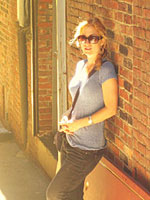
Jones, 31, dyed her bag blue and her jeans black to extend the color -- instead of buying new clothes.

Anna Newell Jones

Strategy: Go on a spending fast for a year
Advice: Get creative. There are endless ways to save.

I had been spending over my means for a while. Every month I was spending at least $300, overdrafting my account and feeling horrible about it.

I realized I had all these wants and it was an insatiable thing. I would say, "Oh, I love this top from Anthropologie," and then as soon as I got it everything would be great... until I wanted something else. So I knew I needed to do something drastic. And one day, it clicked.

I decided to start a spending fast for the new year, which meant no spending on anything except absolute necessities -- like my mortgage, utilities, car payments -- oh, and hair dyeing. That was one "want" that I turned into a necessity as I started to see my roots grow in.

I can't buy clothes, no coffee out, no eating out. To save money, I've done the normal budgeting things like buying generic brands of groceries. But I've also started wearing all black and dyeing my clothes to extend the color. I've been re-gifting, growing my hair long to avoid haircuts, stuffing two loads of laundry into one and eating a lot of old canned food I've found in my cupboard. I also make random stuff to sell in my spare time. I have a store at Etsy.com where I sell zombie portraits of people, super cute baby onesies and banners, tags and shipping labels.

My year-long spending fast began on January 1, and so far, I have saved $5,772.25. $4,800 of that went to credit cards and the rest will go to paying my parents back the $3,247.97 I owe them and my $10,000 in student loans.
cnndebt2.jpg
Courtesy: Lance Pickett
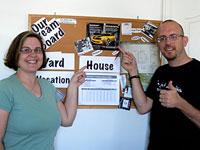
Lance Pickett, 32, and his wife put their "wants" on a Dream Board while they pay off their debt, and they track how close they are to paying off their mortgage.

Lance Pickett

Strategy: Live without the little things
Advice: Don't go too far -- like trying cloth diapers to save $60

My wife and I owed $18,000 in student loans, $6,000 in car loans, $2,000 in credit cards and $152,000 in my mortgage.

We were living paycheck to paycheck and I was tired of seeing my bank account zero out every month. So we wanted to get out of as much debt as possible as soon as possible. We started by saving an extra 1/12th of our total required expenses -- like mortgage, utilities and Internet -- each month, in order to have one month worth of bills saved up at the end of the year. Then we got excited and doubled that. In three years we had six months of living expenses and threw that into a high interest CD at 5%. That really got us going, seeing the money grow -- and we became obsessed with eliminating debt.

We just really took a look at what we need and only spending money on those things. I used to eat out a lot and that cost me $200 a month. Now we invite friends to "eat-in" at our house. We have a garden and purchase produce from co-op programs. Before we became debt-obsessed we would also get nice Christmas gifts for each other, but now we limit each other to $50.

Now, if there's something we want we put it on our "Dream Board," a cork board by our bedroom door that we see everyday. And it will stay there until we're debt free. It also has the loan schedule for our house, and each month we scratch off a month. Next to the schedule, we post our ultimate "want" that we agree to purchase -- with cash of course -- once our house is paid off. I have a 2010 Camaro waiting for me.

Cutting back so much has been hard, but we've learned a lot along the way. My wife learned some things are worth paying more for after trying to use cloth diapers -- which most people use as burp rags -- pinned inside training pants with plastic pants over them for our two kids, all so that she could reuse the diapers and not spend $60 a month on Pull-ups. As a result they both got horrible rashes, so we switched to a cheaper brand of regular diapers.

Altogether, we've paid off around $90,000 since 2005.
cnndebt3.jpg
Courtesy: Jowharah McNeil
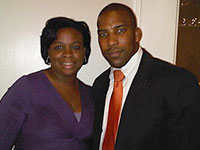
McNeil, 32, and her husband collect loose change in a jar to help make monthly payments on their credit card.

Jowharah McNeil

Strategy: Put spare change to work.
Advice: Cut back, use cash.

I was laid off for 18 months and had two credit cards to pay off, so I had to learn to be creative. My husband and I have been trying out a cash-only spending system and we're only allowed to spend $40 a week per person on non-necessities. That means once the cash is gone, it's gone -- no more spending.

While doing this strict new budget, we noticed we had a lot of loose change everywhere -- in our cars, leftover from doing laundry -- so we started collecting all the change we could find and putting it in a jar by the door. Every month, we would use whatever money is in the jar to make payments on one of the credit cards. The minimum payment is only $39, but we usually paid an extra $50 or $60 using the coins we collected so that we can get it totally paid off as soon as possible.

Since we started collecting the coins about six months ago, we've already paid more than $560 of the $1,000 balance on the card, so this is really working for us.
cnndebt4.jpg
Courtesy: Brian Leigh
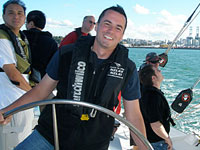
Leigh, 29, learned how to cook -- and ate broccoli every day of the week -- to save money and work his way out of debt.

Brian Leigh

Strategy: Track your expenses
Advice: Don't limit yourself too much, or you will give up.

I was able to pay off $22,000 of my $35,000 in credit card debt over the past 24 months just by looking really closely at where I was spending my money.

Being young, I made foolish mistakes with my credit cards, so when I started really wanting to knock out my debt, the biggest thing for me was tracking my expenses. I started by adding up how much I had been spending on meals and found out I was spending almost $55 a week just on lunch at work.

After that, I sat down, got a little notebook and started tracking every single thing I spent money on. I did that for a couple months, and then I came up with a payment plan. After overestimating how little I could live on the first month, I decided to take small steps.

I readjusted my allowance until it worked with my lifestyle. I started to bring my lunch to work four days a week, I shopped for groceries for one week and would then eat only leftovers during the weekend. I learned how to cook and found foods -- like broccoli -- that I can use in multiple meals so I don't have to waste anything.

To make sure my money goes where I need it to go, I set up two checking accounts and two savings accounts. I deposit $250 into the first checking account every two weeks --when I get my paycheck -- to use for everyday expenses. When it runs out, I don't go out.

I put another $250 into the first savings account as an emergency fund. Every five paychecks, I remove $1,000 from this account and apply it toward my credit card debt. I deposit $100 into the second savings account every paycheck. This account is used for long term goals, like a down payment on a house or a big vacation I want to take. Everything else gets deposited into my second checking account, and my bills and rent are automatically paid out of this account. Those automatic payments include an extra $1,000 toward my non-credit card debt -- like my student loans and car loans -- every month.

cnndebt5.jpg
Courtesy: Jaime Tardy
Tardy, 28, whittled down $70,000 of debt in less than two years by getting on a strict budget.

Jaime Tardy

Strategy: Budget!
Advice: Save, save, save before you quit your day job.

A couple years ago, I decided I wanted to have a baby and quit my job. But there was a problem. My husband and I were in debt, and I made two-thirds of our household income. So I couldn't just quit.

I started out by sitting down and adding up all our debt -- which ended up being around $70,000. The first thing I thought was, 'Wow, we really need to start getting rid of this. We should sell our car right away.'

After some prodding, my husband got on board too. We sold his car and were able to immediately get rid of $19,000 of our total debt. After that, we knew we were totally doing this.

Craigslist and eBay became our best friends, and we sold everything from a kayak to a weight bench and a computer monitor.

My husband did some website design jobs on the side to make some extra money, and we printed out a budget each month so we knew exactly how much we could spend and what we would be spending it on.

We saved on gas costs by limiting the amount of driving we did, and we put ourselves on a grocery budget of $300 a month. On top of that, we cut out cable, lowered our phone bill as much as humanly possible and switched our car insurance twice in one year to find lower rates.

By the time I quit my job for good -- which was less than two years after I started the budget -- we had paid off $70,000 in debt and put $23,000 in the bank as an emergency fund.

Birth control revolution may be on horizon 0

xoiper | 1:26 PM |

FILE - In this May 28, 1999 file photo, a new birth control pill container designed to look like a woman's makeup compact for Ortho-McNeil Pharmaceuti AP – FILE - In this May 28, 1999 file photo, a new birth control pill container designed to look like a woman's …

WASHINGTON – Fifty years after the pill, another birth control revolution may be on the horizon: free contraception for women in the U.S., thanks to the new health care law.

That could start a shift toward more reliable — and expensive — forms of birth control that are gaining acceptance in other developed countries.

But first, look for a fight over social mores.

A panel of experts advising the government meets in November to begin considering what kind of preventive care for women should be covered at no cost to the patient, as required under President Barack Obama's overhaul.

Sen. Barbara Mikulski, D-Md., author of the women's health amendment, says the clear intent was to include family planning.

But is birth control preventive medicine?

Conflicting answers frame what could be the next clash over moral values and a health law that passed only after a difficult compromise restricting the use of public money for abortions.

For many medical and public health experts, there's no debate.

"There is clear and incontrovertible evidence that family planning saves lives and improves health," said obstetrician-gynecologist Dr. David Grimes, an international family planning expert who teaches medicine at the University of North Carolina. "Contraception rivals immunization in dollars saved for every dollar invested. Spacing out children allows for optimal pregnancies and optimal child rearing. Contraception is a prototype of preventive medicine."

But U.S. Catholic bishops say pregnancy is a healthy condition, not an illness. In comments filed with the Department of Health and Human Services, the bishops say they oppose any requirement to cover contraceptives or sterilization as preventive care.

"We don't consider it to be health care, but a lifestyle choice," said John Haas, president of the National Catholic Bioethics Center, a Philadelphia think tank whose work reflects church teachings. "We think there are other ways to avoid having children than by ingesting chemicals paid for by health insurance."

So far, most other religious conservatives have stayed out of the debate, though that could change. Some say they are concerned about any requirement that might include the morning-after pill. The Food and Drug Administration classifies it as birth control; some religious conservatives see it as an abortion drug.

Jeanne Monahan, a health policy expert at the conservative Family Research Council, said her group would oppose any mandate that lacks a conscience exemption for moral and religious reasons. She said there's "great suspicion" that a major abortion provider, Planned Parenthood, is leading the push for free birth control.

As recently as the 1990s, many health insurance plans didn't even cover birth control. Protests, court cases, and new state laws led to dramatic changes. Today, almost all plans now cover prescription contraceptives. So does Medicaid, the health care program for low-income people.

The use of birth control is "virtually universal" in the U.S., according to a government report this summer from the National Center for Health Statistics. Nearly 93 million prescriptions for contraceptives were dispensed in 2009, according to IMS Health, a market analysis firm. Generic versions of the pill are available at Walmart stores, for example, for $9 a month.

Still, about half of all pregnancies are unplanned, and many occur among women using some form of contraception. The government says the problem is rarely the birth control method, but "inconsistent or incorrect use," such as forgetting to take a pill.

Advocates say free birth control would begin to address the problem.

"We can look at other countries where birth control is available for no cost, and what we see are lower pregnancy rates, lower abortion rates and lower teen pregnancy," said Cecile Richards, president of Planned Parenthood.

It would remove a cost barrier that may be keeping women away from more reliable long-acting birth control, and also affects those who don't do well on inexpensive generics.

A major research study now taking place in St. Louis provides a glimpse of how things might change.

The Contraceptive CHOICE Project is providing free birth control to as many as 10,000 women, tracking their decisions and the results. About 70 percent have chosen long-acting contraceptives such as IUDs (intrauterine devices) or implants, which are reversible and have a much lower failure rate than pills or condoms. The proportion of U.S. women using such methods remains low; part of the reason seems to be higher upfront cost.

"The shift we need to see in the United States is a shift away from methods like the pill and condoms to the most effective methods, like implants and IUDs," said Dr. Jeffrey Peipert, a principal investigator on the study. "And we'll only see that shift if somebody is willing to pay for it."

How the Obama administration will apply the law remains to be seen. It could allow insurance plans wide discretion on meeting the coverage requirement. A panel convened by the Institute of Medicine will hold its first meeting Nov. 16 to begin work on recommendations to HHS. The department has until next August to make its decision.

____

Online:

Institute of Medicine: http://tinyurl.com/2fqa3yc

U.S. Conference of Catholic Bishops: http://www.nccbuscc.org/

U.S. government health care site: http://www.healthcare.gov/

National Catholic Bioethics Center: http://www.ncbcenter.org

Dr. David Grimes: http://davidagrimes.com/

Mikulski amendment: http://tinyurl.com/25ph2rn

Family Research Council: http://www.frc.org/

Planned Parenthood: http://www.plannedparenthood.org/

National Center for Health Statistics: http://www.cdc.gov/nchs/

Contraceptive CHOICE Project: http://www.choiceproject.wustl.edu/

American teen crowned Miss World 0

xoiper | 1:22 PM |

Soft-spoken 18-year-old American wins Miss World

AP/Alexander F. Yuan

BEIJING – The newest Miss World is from the United States.

Alexandria Mills, a soft-spoken 18-year-old, was named the winner in Saturday night's contest in southern China. The tall blonde was a relative surprise winner after speculation focused on other contestants.

Second place went to Emma Wareus of Botswana, and Adriana Vasini of Venezuela came third.

The host country's own contestant, Tang Xiao, also was among the final five.

According to a brief biography on the Miss World website, Mills calls Louisville, Kentucky, her hometown, and she recently graduated from high school. She would like to become a teacher.

"I've never met a stranger and enjoy meeting new people," she says in the bio.

For the final, she was wearing a shimmering ivory-colored dress slit up the leg.

Mills takes over the title from Kaiane Aldorino of Gibraltar, who was named Miss World 2009 at a ceremony in South Africa last December.

Women from more than 100 countries participated in the contest, organizers said.

This is the 60th year of the Miss World Competition, and organizers brought back contestants from past decades to give the night a retrospective theme.

Follow Yahoo! News on , become a fan on

America's most affordable cities 0

xoiper | 1:17 PM |

Oklahoma may be best known for wind sweepin' down the plain and corn that's as high as an elephant's eye. But there's a lot more going on in the Sooner State than Rodgers and Hammerstein musicals would lead you to believe.

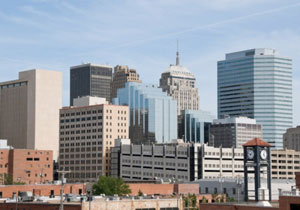
Oklahoma City
Oklahoma City

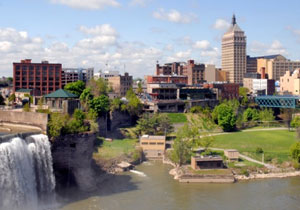
Just consider the state capital, Oklahoma City: It's got good schools and universities, friendly residents and an unemployment rate well below the national average--6.3% compared with the nationwide 9.5%. Thanks to good jobs and low cost of living, the Oklahoma City metro area ranks as America's Most Affordable City.

In compiling our list, we searched for cities that had a balance of cheap living and economic prosperity--places with solid job markets, but where costs aren't prohibitive.


Buffalo
Buffalo

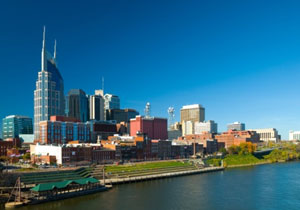
Just because you can get by on the cheap doesn't mean these places are backwaters. Fifth-ranked Nashville, Tenn., is a cultural and entertainment capital at the center of its state economy; Austin, Texas, (No. 10) is one of the nation's hottest cities for high-tech jobs. All 10 of the cities on the list boast relatively low unemployment rates, inexpensive groceries, health care, transportation and housing. In short, they're desirable destinations all around.

"State capitals and university towns have vibrancy because of their job base, the stability of jobs and cultural diversification," says James P. Gaines, a research economist at the Real Estate Center at Texas A&M University.

Behind the Numbers

Rochester
Rochester

To find the most affordable cities in the country, we looked at all Metropolitan Statistical Areas with populations of at least 100,000. We ranked each metro on the cost of a basket of goods and services, including groceries, health care and transportation, as of the second quarter of 2010, as measured by the Counsel for Community and Economic Research. We also measured the monthly cost of housing as a percentage of household income, using 2009 data from the U.S. Census Bureau's most recent American Community Survey--a mini-Census done annually with a representative sample of the population.

To exclude cities that were affordable only because of a depressed economy, we also factored in the unemployment rate (the lower, the better). We averaged the rankings on all measures to arrive at a final score for each city. Two large cities that were unlikely to be in the top 10--Indianapolis, Ind., and Milwaukee, Wis., were excluded from the ranking because complete data were not available.

Post-Industrial Successes

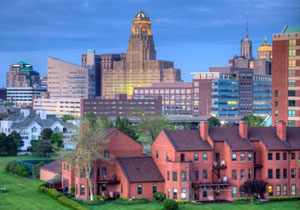
Pittsburgh
Pittsburgh

Pittsburgh, Pa., Buffalo, N.Y., and Rochester, N.Y., take second, third and fourth places, respectively. These Northeastern cities have a lot in common, emerging from long slumps after being deserted by their manufacturing economies. They still have a long way to go, but the combination of a newly diversified economy and a history of sustained low costs makes them affordable.

"They didn't see much of a boom, so prices never got out of whack," says Kermit Baker, senior research fellow at Harvard University's Joint Center for Housing Studies, of these cities. "The economy is good, but not great. It didn't go through all the turbulence the rest of the country did."

Southern Belles

Nashville
Nashville

Several standouts on the list are Southern cities, including Nashville, Louisville, Ky., (No. 8), and Birmingham, Ala. (No. 9).

Texas cities take three spots, with San Antonio coming in at No. 6, Houston at No. 7 and Austin claiming the final spot. The Lone Star State has long enjoyed the benefits of a business-friendly tax climate, rich natural resources and a stable housing economy. As a result, jobs are available, but costs low enough that Texans can stretch the fruits of their labor further. That combination is enticing to Americans seeking to relocate.

"The state [as a whole], and Houston and San Antonio [in particular] are deriving significant income from domestic in-migration. People are moving to Texas because of job availability and because of the cost of housing being so low," says Gaines. But, he adds, the number of people seeking to cash in on the cities' bounty hasn't driven up prices. "Texas has always been a wide-open, laissez-faire, low-control, low-regulation place, but it doesn't add to costs."

Affordability means more than just the ability to buy a cheap box of cereal. No matter how low prices are, it doesn't matter much if your wallet is empty and your next paycheck is only hypothetical. In these cities, costs have stayed down but residents have held onto steady incomes and decent jobs, making them a true bargain.

Top 5 Most Affordable Cities

1. Oklahoma City, Okla.
Metropolitan Statistical Area: Oklahoma City, Okla.
Cost-of-living rank: 12
Unemployment rank: 4
Housing-costs rank: 2

2. Pittsburgh, Pa.

Metropolitan Statistical Area: Pittsburgh, Pa.
Cost-of-living rank: 6
Unemployment rank: 15
Housing-costs rank: 1

3. Buffalo, N.Y.

Metropolitan Statistical Area: Buffalo-Niagara Falls, N.Y.
Cost-of-living rank: 16
Unemployment rank: 9
Housing-costs rank: 3

4. Rochester, N.Y.

Metropolitan Statistical Area: Rochester, N.Y.
Cost-of-living rank: 25
Unemployment rank: 1
Housing-costs rank: 8

5. Nashville, Tenn

Metropolitan Statistical Area: Nashville-Davidson-Murfreesboro-Franklin, Tenn.
Cost-of-living rank: 3
Unemployment rank: 23
Housing-costs rank: 11

The world's 10 coolest observation decks 0

xoiper | 5:47 AM |

Find some of the world’s most thrilling views atop a growing number of observation decks.

By Karrie Jacobs

You could be standing on air.

That’s what it feels like when you step inside one of the glass boxes that protrude from the 103rd-floor Skydeck at Chicago’s Willis (formerly Sears) Tower. After all, the seamless, apparently unsupported glass floor is the only thing between your toes and the urban mosaic 1,300 feet below. Even if you’ve been to hundreds of observation decks, the effect of the Ledge is still unnerving.

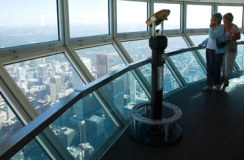
And really, a skyscraper observation deck should make you feel like you’re flying. Decks, at their best, are a mechanism for transforming the engineering genius of super-tall buildings into pure visceral magic. Emerge from the elevators at the top of places like Toronto’s CN Tower and you get a double hit: a dizzying view and a powerful sense of immersion in the building’s unprecedented scale.

Fortunately for altitude-loving travelers, the demand for that total skyscraper experience is seemingly endless. There are currently so many observation decks opening that it’s hard to keep track.


Burj Khalifa,
Dubai, United Arab Emirates

Note that while the observation deck at the newest world’s tallest building (around 2,717 feet) is called At the Top, it’s not. It’s on the 124th floor of 163. What it offers is massive double-height windows, an open-air terrace, and an unparalleled perspective, which tends to make the real Dubai look a lot like the architectural models you see on display over town.

Observe This: Buy tickets online well in advance if you want to visit at sunset. Note that a special $108 ticket will allow you to cut the line.


The Willis (formerly Sears) Tower, Chicago

How do you make the observation deck of a 37-year-old skyscraper that hasn’t been the world’s tallest since 1998 feel new again? You attach a series of magnificently scary glass boxes, collectively known as the Ledge, to the venerable Skydeck. The illusion that you’re standing unsupported 103 stories above the ground is a real crowd-pleaser.

Observe This: The boxes are hung from a moving steel frame that allows them to be retracted into the building to make way for the window-washing rig.


Guangzhou TV & Sightseeing Tower, Guangzhou, China

Scheduled to open to the public in November, this astonishingly skinny, shockingly tall (2,001 feet) tower has two primary functions: to support a TV antenna and to show tourists a good time. Attractions include a guided open-air climb up 600 feet along a winding staircase through a jungle of structural steel, a tiered sundeck at the very top where weary climbers can lounge on bleachers, and yes, the World’s Highest Ferris Wheel.

Observe This: Supposedly the two revolving restaurants won’t be serving soup because the tower’s swaying motion will turn attempts to eat it into a Charlie Chaplin routine.


Shanghai World Financial Center, Shanghai, China

On the 100th floor of the Shanghai World Financial Center Observatory, the top tier of a three-layer observatory is 1,555 feet up and still the world’s highest. Architecture geeks will love it for the fact that it spans the building’s most distinctive feature, the rectangular cutout that makes the whole building resemble a giant bottle opener.

Observe This: Check out the elevator artwork by Toshio Iwai on the way up.


Grand Canyon Skywalk, Arizona

Whose idea was this? Cantilevered way, way out over the Grand Canyon’s west rim, with the Colorado River some 4,000 feet below, this U-shaped glass bridge is arguably the world’s highest observation deck. It’s certainly the most mind-blowing one.

Observe This: Deck visitors have to don paper slippers over their shoes to keep from scuffing the glass.


International Commerce Centre, Hong Kong, China

Sky 100, atop this newly completed 108-story tower (currently the world’s fourth tallest), will give visitors the opportunity to look back at Hong Kong Island from the Kowloon side of Victoria Harbour. When the deck opens later in 2010, you can skip the multimedia exhibitions and visitor resource center. The thing here is the view, pure and simple, a panorama of one of the world’s most spectacular-looking cities.

Observe This: Try to visit sky 100 at Christmas, when Hong Kong office towers are decorated with multistory holiday lights.


SkyTower, Auckland, New Zealand

SkyTower, at 1,076 feet the “tallest man-made structure in New Zealand,” doesn’t hold any world records, but it is home to two high-adrenaline attractions: Sky Jump, an opportunity to BASE jump while safely attached to a wire, and Sky Walk, a stroll around the tower’s pergola while snuggly harnessed and tethered to an overhead rail.

Observe This: A similar Skywalk is available at the Sydney Tower in Australia, and the Macau Tower in China features bungee jumping.


CN Tower, Toronto, Ontario

Toronto’s famous television tower, 1,815 feet high, was the world’s tallest structure (taller than the tallest skyscrapers) until the Burj Khalifa came along. It is also the home of the original observation-deck glass floor, 256 square feet of it, installed in 1994. But unlike on Chicago’s Ledge, here you can clearly see the structural members that support the thing.

Observe This: In 2008, they added North America’s first glass-floored elevator. Traveling up to deck level at 1,136 feet, it’s also the world’s highest glass-bottomed elevator.


The Empire State Building,
New York City

What this 80-year-old, 102-story landmark (the world’s tallest until the World Trade Center stole its title in 1972) has that newer, taller towers don’t is an unsurpassed location in the middle of Manhattan. The 86th-floor observatory has an outdoor promenade that gives visitors a full sensory immersion in New York City’s sights, sounds, and smells.

Observe This: Yes, you can pay $15 extra and continue on to the 102nd floor, but the 86th is really much nicer.


Theme Building Observation Deck, Los Angeles International Airport

No, it’s not very high up—only 68 feet—but this 1961 tribute to the flying saucer is inarguably cool. It just reopened for the first time since 9/11, after a $12.3 million renovation with a new security apparatus and structural upgrades (no more falling stucco). The outdoor observation deck offers a 360-degree view of flights arriving and departing at LAX.

Observe This: Try the very Jetsons-y Encounter restaurant on the level just below the deck.


See More of the World's Coolest Observation Decks

Dangers of 'click to save' scams 0

xoiper | 11:12 AM |

Online shoppers are familiar with the idea of clicking for coupons and discounts. But one wrong click can stealthily add hundreds of dollars to your credit card balance.


These so-called "coupon click fraud" scams have become pervasive enough to draw the attention of state and federal authorities: last year a federal judge in Boston approved a $10 million class-action settlement against marketer Webloyalty; the New York State Attorney General's office recently reached $18.5 million in settlements with two separate marketers and some of their retail partners; Congress and the Federal Trade Commission have investigated. And in spite of the profits it yields, even online shopping sites have started to realize that subjecting their customers to these kinds of scammy offers is bad for business: In response to customer complaints, several big online businesses — including Orbitz, Priceline.com and VistaPrint — have abandoned such partnerships.


But consumers still need to be vigilant about where and how they shop online to avoid other schemes. After all, previous state settlements haven't stopped marketers from continuing deceptive practices, or kept consumers from falling for them.

These offers look harmless enough. After shelling out $75 for a bouquet of flowers or $30 for movie tickets, internet shoppers are presented with an offer: "Click here to save" $5 or $10 on your next purchase. But there's no coupon to be found, only an invitation to join a discount club for a small monthly fee.


What consumers don't realize — and the sites bury in the fine print — is that the initial click was enough to transfer your credit card information from the merchant to the club, and enroll you automatically. Suddenly you're paying $4 to $20 per month, billed directly to your credit card. Many consumers don't even notice the charges until after they've paid hundreds of dollars for a discount-club membership they didn't even know they had.

The New York Attorney General's office agreed, launching investigations into two of the biggest perpetrators. As a result, affected New Yorkers will receive instructions in the mail about how to claim a refund. The rest of us are on our own.

Here's how to protect yourself and how to get your money back if you've already gotten snared:

Skip Debit

More consumers used debit cards than credit cards last year, the first time in history that's happened, according to a September 2010 report from Javelin Strategy & Research. But using a debit card online can make shoppers more vulnerable if they do get scammed, says Paul Stephens, the director of policy and advocacy for the Privacy Rights Clearinghouse, a nonprofit consumer advocacy group. The Fair Credit Billing Act limits personal liability for unauthorized credit card charges to $50, with most issuers waiving even that. Debit card protections, however, depend largely on how fast you spot and report the fraud, he says. Meanwhile, even one small, unexpected charge from a discount club can wreak havoc on your checking account, spurring overdraft fees.

Don't Click

If a retailer does offer some kind of post-purchase deal or rebate, you'll get the details directly via e-mail, says Randy Allen, an associate dean for Cornell University's Johnson Graduate School of Management. In other words, you'll never have to click. Instead, you'll receive an email notifying you of an earned reward or rebate. Drugstore.com, for example, offers 5% rebates automatically accrued in your online account, which you set up during check-out. Still worried? Log into your account on the retailer's site to check for eligible coupons instead of clicking through from your email.

Fight Back

When scrutinizing your credit card bill each month, don't be shy about questioning charges, says Edgar Dworsky, the founder of consumer advocacy site ConsumerWorld.org. Figure out how far back the charges go, and then call the toll-free number for the company that's listed on your statement to ask for a refund. Most marketers will oblige, but if not, you can file credit card chargeback for the un-refunded fees, he says. Call your card's customer service line and ask to file a dispute. You'll need to answer a few questions by phone, and possibly fill out a form.

U.S. reveals final price tag for TARP bailout 0

xoiper | 11:11 AM |

Related Video


Yahoo Finance's Economics Editor and Columnist Daniel Gross discusses the Treasury's report with Tech Ticker host Aaron Task.

The price to taxpayers of the bailouts and financial rescue of 2008 and 2009 continues to fall sharply. In figures to be released later today, the Treasury Department will report that the final net cost of the TARP is expected to be about $50 billion,Yahoo! Finance has learned. Add in expected returns from Treasury's interest in insurance company AIG, and the final net cost will be closer to $30 billion.

The news of the shrunken cost, which comes on the two-year anniversary of the legislation that created TARP, represents a dramatic improvement. It highlights the resilience of the markets, as well as the folly of short-term financial projections. In August 2009, the TARP cost was projected to be $341 billion. In its mid-session review, released in August of this year, the Office of Management and Budget projected the total cost would come to $91 billion.

In an interview this morning, Treasury Secretary Timothy Geithner credits several forces with bringing the cost down. Strong action by the Central Bank to guarantee assets and intervene in markets was vital.

"This worked only because it was combined with the creativity and the force of the Fed," he said. A modest recovery in the economy "from a period in which people thought it would be the end of the world" helped reflate assets and markets. And the Bush and Obama administrations pursued a policy that combined broad-based asset guarantees with tough pressure for banks to recapitalize on their own.

The figures, which are based on current market prices, likely won't do much to bolster the popularity of the program. Geithner won't be asking his predecessor, Henry Paulson, to join him for a victory lap around the Mall in Washington.

In the fall of 2008, Congress authorized the government to spend up to $700 billion to shore up the quaking financial system, and it is common for critics to refer to TARP as a $700-billion program. But the full amount was never spent. The TARP had several components. (The full roster and details can be seen here.) Some components were designed as pure expenditures rather than investments, such as the nearly $30 billion earmarked for the Home Affordable Modification Program (HAMP).

Apart from the funds spent on housing, Treasury now doesn't expect to lose money. In the central component of the TARP, the capital purchase program (CPP), Treasury purchased shares of preferred stock in hundreds of banks. Of the $205 billion invested in banks through the CPP, $153 billion has been paid back. With dividends ($16 billion) and the sale of warrants Treasury received ($6.9 billion) bringing in more cash, the program is on a glide path toward break-even. In the TARP Two Year Retrospective, published today, Treasury now projects a profit of $16 billion on the CPP and other programs to aid banks. Geithner argues that the choices made by the Obama administration in early 2009 — to avoid full nationalization, subject banks to stress tests, and push them to raise capital — were central to this outcome. "Preemptive nationalization would have been vastly more costly," he said.

Two huge wild cards remain. First, AIG. The insurer received more than $180 billion in support from Treasury and the Federal Reserve, including $69 billion in TARP funds. AIG last week issued a plan to extricate itself from the various financial relationships it has with the Fed and the Treasury. The centerpiece is a plan to convert Treasury's preferred shares into common stock representing about 92 percent of AIG, and then sell it slowly over time. If it succeeds, Treasury will ultimately see gains of $16 billion on its holdings in AIG. Of course, while several TARP exits have come more quickly than expected, these plans rest on market conditions remaining favorable for some time.

In the first half of 2009, Geithner said, the government figured it would take five to eight years to extricate itself from AIG. Today, he concedes it could be a matter of years, "but in the low single digits." Treasury should complete its sales of Citi stock by the first quarter of 2011.

Second, there's the $81 billion invested in the automobile sector, most of it in General Motors and related entities. Of that, $67 billion remains outstanding, and GM's upcoming initial public offering is likely to make only a small dent. Treasury now expects that it will ultimately lose $17 billion on its efforts to aid the auto industry. "The returns we'll get from our investments in banks and AIG will be more than enough to cover the money we'll lose in autos," said Geithner.

While Geithner, Paulson, and those who argued that the net costs of TARP would be a fraction of their original advertised cost have been vindicated, the Treasury secretary suggests profits aren't the proper measure to use when evaluating TARP.

"I don't like to focus too much on just the accounting cost," Geithner said. "We weren't in the business to make money. Even if they had lost much money, that would have been the right thing to do." Instead he points to metrics such as the speed at which the price of borrowing came down in 2009, the resumption of economic growth in the second half of 2009, and the speed with which banks raised private capital to replace public funds. "I think it's an excellent record for careful financial stewardship."

These figures likely won't do much to rehabilitate the popular image of TARP. Americans generally regard the program as having been conceived in sin, and attitudes against it have hardened. Through TARP, the government still has a portfolio of $184 billion in "investments" it never wanted — in banks, car companies, AIG, and vehicles created to purchase toxic assets. And even with profits in TARP's core programs, taxpayers will be saddled with other bailout-related costs, such as the assumption of the debt of Fannie Mae and Freddie Mac. More broadly, the benefits of TARP, which was sold as a way to get credit flowing again, haven't always been apparent to most Americans. Treasury has been engaged in a campaign to educate the public about the net cost and impact of TARP. But at a time when Wall Street firms are performing well and unemployment remains high, it remains a difficult sell.

TARP has been an enormous success from a policy perspective — it saved the financial system and averted a second Great Depression at a very low price to taxpayers. But politically, like the assets it was designed to remove from banks, it remains toxic.

Five signs your jeans don't fit 0

xoiper | 11:09 AM |

A flattering pair of jeans is a wardrobe staple that every woman seeks. Unfortunately, shopping for said amazing denim can be compared to the story of Goldilocks and the Three Bears. (This pair is too loose in the butt, this pair is too tight in the legs, and this pair is almost perfect—if I didn't have to pay to get them hemmed!) One tip that we learned from our days working at American Eagle is that you should always try on more than one pair of the same size, same style jean. Denim stretches, and if the pair that you grabbed has been tried on by a few women before you, they'll fit differently than a pair that was just pulled off the warehouse truck. With the expert help from New York-based wardrobe stylist Shatonia Amee, here are five signs that a pair of jeans is not for you:

1. There's bunching, wrinkles, or sagging in the crotch area. "You shouldn't have excess material in your crotch," Shatonia says. "Your jeans should be able to come all the way up and lie flat in that area. If not, your jeans may be too big, or your inseam may be too long." The solution? A lower-rise jean. Related: How to Fit into Your Skinny Jeans

2. Your jeans are pulling and creasing in the crotch. "This means your jeans are too tight," Shatonia says. "You may want to try a jean with more stretch. Don't be afraid to go up in size, either — remember, your main goal is comfort!" Related: Style Solutions for Curvy Women

3. There's a large gap in the back of your jeans. "If you can fit your fist in the back of your jeans, but they fit fine everywhere else, you need to opt for a lower-rise jean," says Shatonia. "Try a mid-rise; if there's still a little space, go for a low-rise. When changing rises, make sure the jeans fit comfortably, and be sure your underwear is not visible. Sit down in them to make sure you aren't revealing too much. If a low-rise is too revealing but there's just a little space in the mid-rise, you can always wear a belt or have them altered." Related: 9 Ways to Look Fashionable This Fall

4. Your jeans are creating a "muffin-top." "There are a few reasons this may be happening," Shatonia says. "One reason could be that your jeans are too tight. Again, don't be afraid to go up in size — it's only a number! You want to be comfortable and look good. Another reason could be that you need a higher rise — your jeans should lie flat on your hips and waistline. When a pair of jeans is too tight or low, they can create that unwanted spillage, or muffin-top, on anyone, regardless of size." Related: 13 Foods That Beat Bloat

5. Your jeans are either hitting the top of your ankle or they're dragging, even when you're in heels. "The length of your leans is a big factor in fit," Shatonia says. "If your jeans only come to the top of your ankle, opt for a longer jean. Some designers indicate length in numbers, but some use S (short/petite), R (regular, for women of average height), or L (long, for woman who are over 5'6). Another problem occurs if your jeans have a lot of bunching at the bottom and are dragging on the ground. If this is the case, you need to opt for a petite style. If this is your issue, I suggest shopping at department stores; not many boutiques offer petite sizes, while most major department stores have a whole department for petite women." Related: What's Your Ideal Weight?


how to Copyright © 2010 Prozine Theme is Designed by Lasantha Home | Privacy Policy | RSS Feed | Comment RSS